
Wenn Sie in der Nähe des Naschmarkts (Wiens 1,5 Kilometer langer Freiluftmarkt im 6. Bezirk, 1060 Wien) nächtigen möchten, stehen Ihnen vier praktische Unterkunftsarten zur Auswahl: Hotels, Serviced Apartments, kurzfristige Vermietungen im Airbnb-Stil sowie Hostels. Alle liegen in einer Gehzeit von 5 bis 15 Minuten vom Markt entfernt, sie unterscheiden sich jedoch deutlich in Preis, Privatsphäre, Küchenausstattung, Aufenthaltsdauer und in der aktuellen rechtlichen Behandlung. Dieser Leitfaden zeigt Ihnen, was das Areal ausmacht, was zu Fuß erreichbar ist, wie sich die beiden angrenzenden Bezirke anfühlen und wie Sie unter den spezifischen Marktbedingungen Anfang 2026 zwischen den Unterkunftsarten wählen.
Fazit: Für 2 bis 3 Nächte reine Besichtigung ist ein Hotel beim Karlsplatz die reibungsärmste Option. Ab 4 Nächten - besonders wenn Sie kochen, arbeiten oder wie ein Einheimischer leben möchten - bietet ein Serviced Apartment im 6. Bezirk in Wien 2026 ein deutlich besseres Preis-Leistungs-Verhältnis und eine rechtlich klarere Grundlage als eine Vermietung im Airbnb-Stil.
Wien verzeichnete einen neuen Allzeitrekord von 20.065.000 Nächtigungen im Jahr 2025, ein Plus von 6 % gegenüber 2024, wobei 83 % der Gesamtnächtigungen auf internationale Gäste entfielen (Wien Tourismus, Jänner 2026). Die Stadt startete mit Schwung in das Jahr 2026: Allein im Februar 2026 wurden rund 1,2 Millionen Nächtigungen gezählt, ein Plus von 5 % im Jahresvergleich, laut einem Aviation.Direct-Bericht vom März 2026, der vorläufige Daten von Statistik Austria und Wien Tourismus zitiert. Was das für Sie in der Praxis bedeutet: Die Preise sind stabil hoch, die besten Apartments sind früher ausgebucht, und der Unterschied zwischen einer durchdachten und einer überstürzten Buchungsentscheidung fällt heute größer aus als noch vor drei Jahren.
Was Sie auf dieser Seite finden
- Der Naschmarkt selbst: Was der Markt tatsächlich ist und wo er in der Stadt liegt
- Gehzeiten vom Markt zu den wichtigsten Sehenswürdigkeiten Wiens
- Die beiden an den Markt angrenzenden Bezirke - Mariahilf (6.) und Wieden (4.) - und wie sie sich anfühlen
- Ein direkter Vergleich von Hotels, Serviced Apartments, Airbnbs und Hostels in der Nähe des Naschmarkts
- Der Wiener Unterkunftsmarkt 2026: Preise, Auslastung, Angebot
- Die für Sie als Gast relevanten Regelungen - Ortstaxe und die 90-Tage-Regel für Kurzzeitvermietungen
- Direktbuchung im Vergleich zu OTA-Plattformen - und was das tatsächlich kostet
- Eine Empfehlung nach Reisetyp sowie 9 FAQs
Der Naschmarkt selbst: was und wo
Der Naschmarkt ist Wiens größter und meistbesuchter Freiluftmarkt. Er erstreckt sich über rund 1,5 km entlang der Wienzeile zwischen Karlsplatz am östlichen Ende und Kettenbrückengasse am westlichen Ende, in 1060 Wien (Wien Tourismus, 2025). Die offizielle Zählung von Wien Tourismus nennt rund 130 Marktstände sowie eine Markthalle mit 13 regionalen Anbietern (Wien Tourismus, 2025); einige Quellen kommen auf bis zu rund 170, wenn man Sitzrestaurants und feste Gastronomieeinheiten mitzählt (Naschmarkt-wien.at, 2026).
Die Stände sind Montag bis Freitag von 06:00 bis 21:00 Uhr und Samstag von 06:00 bis 18:00 Uhr geöffnet. Sonntags ist der Markt geschlossen - nur die Restaurantterrassen sind in Betrieb. Der Samstagsflohmarkt findet am Parkplatz Kettenbrückengasse von 06:30 bis etwa 14:00-15:00 Uhr statt und ist nach Zahl der Anbieter der größte Österreichs (Naschmarkt-wien.at, 2026; Wien Tourismus, 2025).
Zwei Veränderungen prägen das Erleben des Areals im Jahr 2026:
Neu: Der Naschpark - eine 6.820 m² große Grünfläche mit 70 Bäumen und über 50.000 Pflanzen auf dem Areal des ehemaligen asphaltierten Marktparkplatzes - wurde im September 2025 eröffnet und am 19. September 2025 offiziell gefeiert (Vienna.at, September 2025). Der Samstagsflohmarkt bleibt erhalten und findet weiterhin statt. Die umfassendere Neugestaltung des Marktareals läuft bis 2027 weiter, einschließlich einer neuen Bauernmarkthalle, die im Herbst 2025 fertiggestellt wurde.
Offiziell liegt der Markt im 6. Bezirk (Mariahilf), physisch verläuft er aber direkt entlang der Grenze zum 4. Bezirk (Wieden) - die südlichen Stände an der Rechten Wienzeile liegen genau genommen im 4. Bezirk. Für die Wahl der Unterkunft ist diese Verortung wichtig: Ein „Apartment am Naschmarkt" kann in beiden Bezirken liegen, und beide haben einen eigenen Charakter. Mehr dazu unten.
Wo Sie in der Nähe essen: Der Naschmarkt und die Gassen rundherum sind voller wirklich guter Lokale. Siehe unseren Guide wo Wiener wirklich essen - 33 Lokale nach Küche, mit Preisen für zwei und Hinweisen, welche man vorab reservieren muss.
Gehzeiten vom Naschmarkt zu den Sehenswürdigkeiten Wiens
Hier liegt der eigentliche Wert eines Aufenthalts in Naschmarktnähe: Die zentrale Touristenachse ist von hier aus tatsächlich zu Fuß erreichbar. Nachfolgend die offiziellen Gehzeiten laut Wien Tourismus, gegengeprüft mit unabhängigen Reiseführern.
| Ziel | Gehzeit ab Naschmarkt | Anmerkungen |
|---|---|---|
| Secession (Klimts Beethovenfries) | ca. 3 Min. (200 m) | Am östlichen Ende des Marktes (Wien Tourismus, 2025) |
| Wiener Staatsoper | ca. 5 Min. (400 m) | Über den Karlsplatz; mündet in die Ringstraße (Wien Tourismus, 2025) |
| Karlsplatz / Karlskirche | ca. 3 Min. | Direkter Weg vom östlichen Eingang |
| MuseumsQuartier | ca. 10 Min. (700-800 m) | Leopold Museum, mumok, Kunsthalle (Wien Tourismus, 2025) |
| Kunsthistorisches Museum | ca. 12 Min. | Über den Maria-Theresien-Platz, gegenüber dem MuseumsQuartier |
| Stephansdom / Stephansplatz | ca. 15 Min. | Geografisches Zentrum der Inneren Stadt (1. Bezirk, historischer Kern Wiens) |
| Belvedere | ca. 20 Min. | Oder 1 Station mit der Straßenbahnlinie D ab Karlsplatz |
Zum Thema Verkehr sind die Eckpunkte einfach: Die U4 Kettenbrückengasse ist die wichtigste Marktstation; Karlsplatz (U1, U2, U4) bedient das östliche Ende. Eine Einzelfahrt der Wiener Linien kostet 3,20 € an der Station beziehungsweise 3,00 € über die Wiener-Linien-App, gültig ab 1. Jänner 2026 (Wiener Linien, November 2025). Die Jahreskarte stieg zum gleichen Datum auf 467 € (digital: 461 €), nachdem sie seit 2012 unverändert bei 365 € gelegen war.
Tipp aus der Stadt: Vom Naschmarkt bringt Sie die U4 in 8 Minuten zum Schloss Schönbrunn und in rund 15 Minuten - mit einem Umstieg auf die U1 am Karlsplatz - zum Wiener Hauptbahnhof. Sie wohnen in Marktnähe und können Wiens Programm aus klassischer Musik und Palais absolvieren, ohne ein einziges Mal ein Taxi buchen zu müssen.
Schon einen Plan für die Tage? Unsere 3-Tage-Route durch Wien, direkt am Naschmarkt ordnet jede Station nach Gehzeit vom Markt - mit ehrlicher Kostenrechnung für 1-7 Tage.
Die beiden an den Naschmarkt angrenzenden Bezirke
Der Markt verläuft entlang der Grenze zwischen zwei Bezirken. Die Entscheidung zwischen Mariahilf (6. Bezirk) im Norden und Wieden (4. Bezirk) im Süden ist überwiegend eine Frage des Charakters, nicht der Entfernung.
Mariahilf (der 6. Bezirk)
Der 6. Bezirk ist Wiens zugänglichstes hippes Wohnviertel. Er verbindet traditionelle Wiener Kultur mit unabhängigen Geschäften, Designstudios, Vintage-Läden und Lokalen. Der englischsprachige Stadtführer Vienna Würstelstand beschreibt Mariahilf als Bezirk mit „hoher Begehbarkeit" und starkem „Sexy-Faktor" - weit entfernt von offizieller Tourismusprosa, aber eine treffende Charakterisierung (Vienna Würstelstand, evergreen).
Drei Straßen prägen den Bezirk:
- Mariahilfer Straße - Wiens wichtigste Einkaufsstraße, überwiegend mit internationalen Mainstream-Marken besetzt; verläuft vom MuseumsQuartier bis zum Westbahnhof.
- Gumpendorferstraße - lokal als „der kleine Hipster-Bruder der Mariahilfer Straße" bezeichnet: unabhängige Restaurants, Vintage-Läden, Nachbarschaftsbars, mehr Kulinarik als Mode.
- Raimundhof - eine im mediterranen Stil überdachte Passage mit kleinen Boutiquen und Lokalen zwischen Mariahilfer Straße und den Seitengassen.
Zu den Kulturadressen im 6. Bezirk zählen das Theater an der Wien (Oper), das Raimund Theater (Musical), das TOP Kino (unabhängiges Kino) und die Türkis Rosa Lila Villa (LGBTQ+-Zentrum). Drei der meistgeschätzten traditionellen Kaffeehäuser Wiens - Café Ritter, Café Sperl und Café Jelinek - befinden sich allesamt in Mariahilf.
Zur Wohnsituation: In Mariahilf liegen Studios bei rund 1.000 €/Monat, Zwei-Zimmer-Wohnungen bei bis zu 3.000 €/Monat (Expatica, Dezember 2025). Der Bezirk ist stellenweise spürbar hügelig - gut zu wissen, wenn Sie Gepäck oder eingeschränkte Mobilität berücksichtigen müssen.
Wieden (der 4. Bezirk)
Wieden grenzt im Süden an den Naschmarkt und zählt zu den ruhigeren, eher wohnlich geprägten Bezirken im inneren Wien. Sein Charakter ist weniger ausgeprägt trendig als jener von Mariahilf - Kaffeehäuser und Botschaften koexistieren mit jüngeren Bars und Designgeschäften. Der Karlsplatz mit der barocken Karlskirche, dem Otto-Wagner-Pavillon und dem Wien Museum liegt am Rand von Wieden (formal innerhalb des 1. Bezirks / der Inneren Stadt, physisch aber direkt an der Grenze zum 4. Bezirk).
Für den Verkehr stehen die U1 und U4 (Taubstummengasse, Karlsplatz) sowie die Straßenbahnlinien 1, 62, 65 und D zur Verfügung - Wieden bringt Sie damit schneller in den historischen Kern als die meisten Teile des 6. Bezirks. Connecting Vienna beschreibt den Bezirk als multikulturell, mit traditionellen Kaffeehäusern neben hippen Bars und einer beständigen Kunstszene (Connecting Vienna, 2024).
Praktischer Hinweis zur Unterkunft: Wieden beherbergt eine hochwertige Budget-Option - Wombat's City Hostel direkt am Markt - sowie einige Boutique-B&Bs und Apartmentvermietungen (Connecting Vienna, 2024). Die Hotels in Wieden sind tendenziell kleiner und ruhiger als jene, die sich auf der 1.-Bezirk-Seite rund um den Karlsplatz konzentrieren.
Wie Sie sich entscheiden
Wenn sich Ihre Reise um Einkaufen, Kaffeehausbesuche und Gastronomie in Gehweite dreht, ist der 6. Bezirk die naheliegendere Wahl. Wenn Sie Ruhe, eine schnellere Anbindung an die Innere Stadt und einen wohnlicheren Charakter bevorzugen, ist es der 4. Bezirk. Beide bringen Sie binnen 10 Minuten zum Markt, zur Secession und zur Staatsoper.
Unterkunftsarten im Vergleich: Hotel, Serviced Apartment, Airbnb, Hostel
Rund um den Naschmarkt findet man vier praktische Unterkunftskategorien. Welche für Sie die passende ist, hängt von Aufenthaltsdauer, Budget und Ihrem Tagesprogramm ab.
| Typ | Üblicher Übernachtungspreis | Empfohlen für | Küche | Tägliche Reinigung | Mindestaufenthalt | Gehzeit Naschmarkt | Anmerkungen |
|---|---|---|---|---|---|---|---|
| 4-Sterne-Hotel beim Karlsplatz | 180-340 € | 1-3 Nächte für Business oder Sightseeing | Nein | Ja | 1 Nacht | 5-10 Min. | Wiener Hotel-ADR lag bei 211 € für die 12 Monate bis Juni 2025 (HVS / Hospitality Net, August 2025) |
| Serviced Apartment | 150-280 € (bei MINT 185-375 €) | Ab 4 Nächten, Familien, designaffine Freizeit, ruhige Geschäftsreise | Voll ausgestattete Küche | Wöchentlich | 2 Nächte (üblich) | 1-10 Min. | Hybridmodell: Apartment-Privatsphäre kombiniert mit hotelähnlicher Betreuung |
| Airbnb / Kurzzeitvermietung | 80-180 € (Wien-STR-ADR 112 €) | Flexible Gruppen, sehr kurze Reisen, Self-Check-in-affine Gäste | Voll ausgestattete Küche | Keine | 1 Nacht (vom Anbieter gesetzt) | Stark variierend | Seit Juli 2024 gilt für die meisten Vermietungen eine 90-Tage-Obergrenze pro Jahr (siehe Regelungen unten) |
| Hostel (z. B. Wombat's am Naschmarkt) | 30-90 € Schlafsaal; 90-140 € Privatzimmer | Alleinreisende, Studierende, sehr preisbewusste Gäste | Gemeinschaftsküche | Variabel | 1 Nacht | 0-2 Min. | Wombat's liegt direkt am Markt; Privatzimmer-Option verfügbar |
Mews, eine Hospitality-Plattform, definiert ein Serviced Apartment als „Hybridmodell zwischen Apartment und Hotel, das den Komfort eines Apartments bietet - eine voll ausgestattete Küche, ein Wohnzimmer, eigene Badezimmer und Parkplatz - und gleichzeitig hotelähnliche Dienstleistungen wie Rezeption, Fitnessbereich, Concierge und Reinigung sicherstellt" (Mews, 2024). In Wien bieten Serviced Apartments auf kleinerer Boutique-Ebene in der Praxis selten eine Rezeption vor Ort oder einen Fitnessbereich - was Sie bekommen, ist die Küche, die räumliche Trennung mit eigenem Wohnbereich und einen Gastgeber, der persönlich antwortet. Genau dieser Tausch - weniger Hotelannehmlichkeiten, dafür mehr Raum und Autonomie sowie ein echter Ansprechpartner am anderen Ende der Nachricht - ist das zentrale Argument.
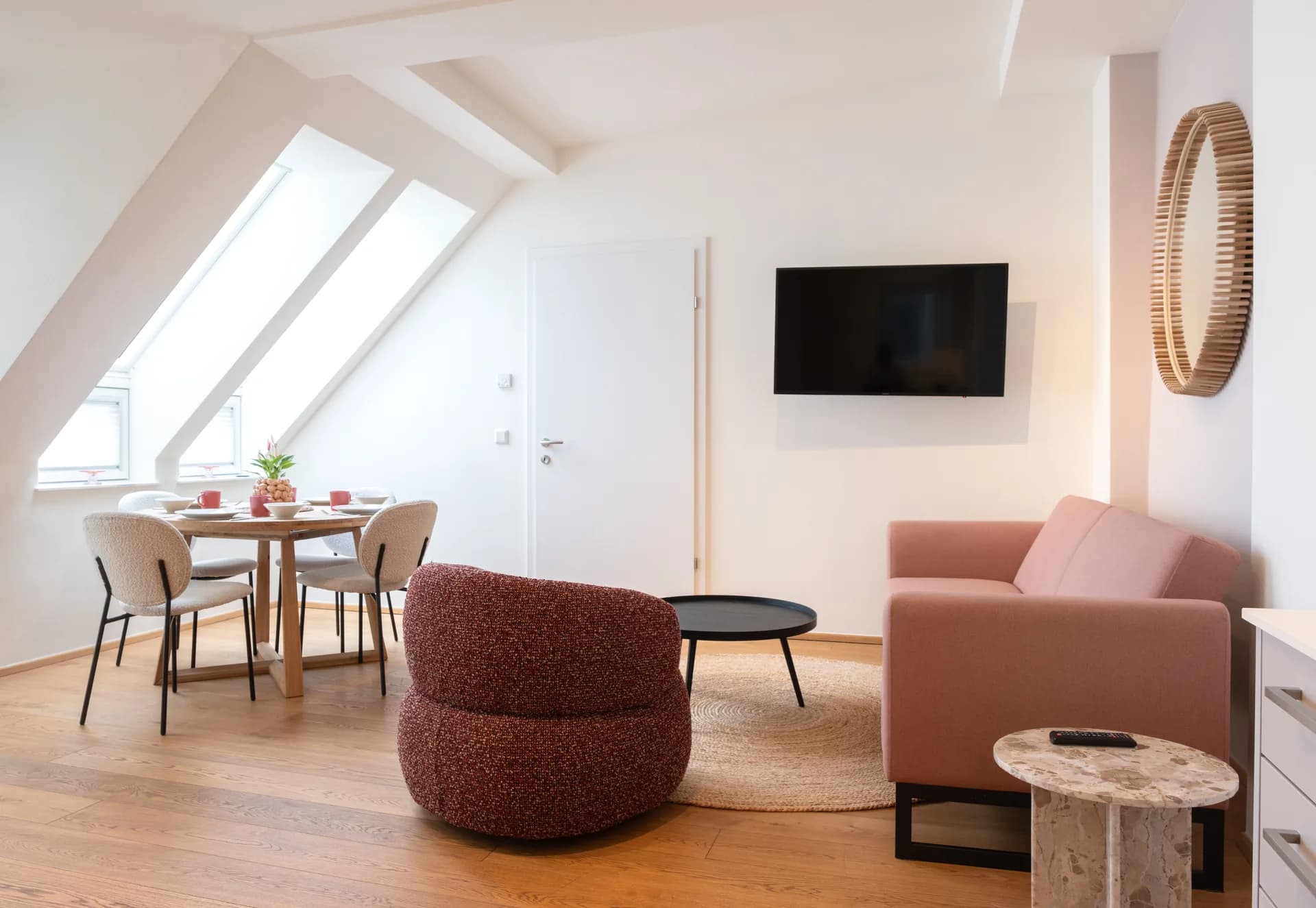
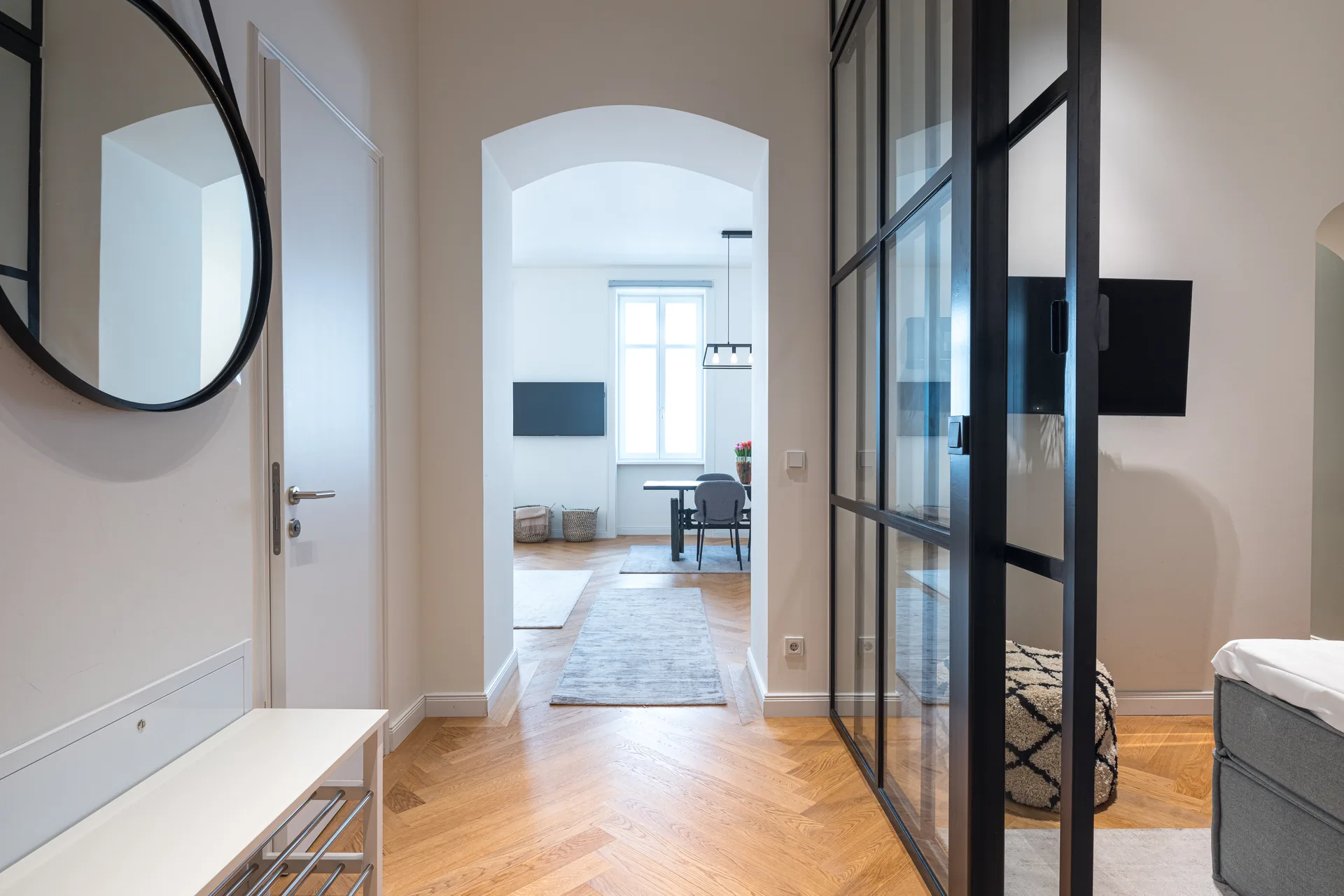
Speziell für einen Aufenthalt mit Naschmarkt-Anbindung betreibt MINT Vienna at the Naschmarkt fünf Apartments in 1 Minute Gehzeit vom Markt, von einem 35 m² großen Studio bis zur 85 m² großen, zweigeschossigen Maisonette. Die Empfehlung nach Reisetyp finden Sie im Abschnitt unten.
Vom Gastgeber: „Hallo, ich bin Christian. Ich führe MINT gemeinsam mit meiner Familie. Handgefertigte Apartments für ruhige Geschäftsaufenthalte, lange Wochenenden mit Freunden und Familie oder unsere Premium-Penthäuser - jedes davon wird persönlich betreut. Buchen Sie direkt, und Ihre Nachricht erreicht mich."
Der Wiener Unterkunftsmarkt 2026
Drei Kennzahlen liefern den Rahmen, in dem sich Preise und Angebot derzeit bewegen. Sie erklären, warum die Übernachtungspreise stabil hoch sind und warum die Apartments, die Sie tatsächlich möchten, in der Nebensaison bereits 8 bis 12 Wochen im Voraus ausgebucht sind.
Hotels (oberer Anker). Die Hotel-ADR (durchschnittliche Tagesrate) Wiens erreichte 211 € für die 12 Monate bis Juni 2025, ein Plus von 6,2 % im Jahresvergleich, bei einer Auslastung von 76,8 % (Hospitality Net / HVS / Cushman & Wakefield, August 2025). Vier Neueröffnungen brachten 522 zusätzliche Zimmer - gewichtet nach Eröffnungsdatum entspricht das einer Angebotsausweitung von 6,5 %. Der Nettoumsatz der Hotellerie im Jänner 2026 erreichte rund 75,5 Mio. €, ein Plus von 9 % im Jahresvergleich (Aviation.Direct unter Berufung auf vorläufige Daten von Statistik Austria und Wien Tourismus, März 2026). Wien hatte 2025 insgesamt 450 Hotels und rund 42.400 Zimmer (84.600 Betten); 60 % der Betten entfallen auf die 4- und 5-Sterne-Kategorien (Wien Tourismus, Jänner 2026).
Kurzzeitvermietungen (unterer Anker). Der Wiener Markt für Kurzzeitvermietungen ist größer, als erstmalige Besucher erwarten, doch die Hauptkennzahlen variieren je nach Methodik. AirROI weist für April 2025 bis März 2026 eine Wien-STR-ADR von etwa 162 USD (rund 148 €) und eine Auslastung von 47,2 % aus, basierend auf 8.452 aktiven Inseraten, mit einem Angebotswachstum von 56,8 % im Jahresvergleich (AirROI, 2026). AirROI zählt alle verfügbaren Kalendernächte, einschließlich gesperrter und nicht gebuchter Termine. Airbtics meldet für Februar 2025 bis Jänner 2026 eine ADR von 112 € und eine Auslastung von 78 % auf 8.889 aktiven Inseraten - die 78 % beziehen sich jedoch nur auf jene Nächte, die der Gastgeber im Kalender aktiv freigegeben hat (Airbtics, März 2026). Die konservativere AirROI-Zahl bildet die gästeseitige Nachfrage redlicher ab: An jedem beliebigen Punkt im Jahr ist rund die Hälfte des Kalenders gebucht.
Serviced Apartments (Mittelfeld). Eigenständige Serviced Apartments im Preisniveau von MINT (185-375 €/Nacht) liegen zwischen dem STR-Durchschnitt und der Hotel-ADR. Die wirtschaftliche Logik bei einem Aufenthalt ab 4 Nächten ist klar: Eine Küche senkt die täglichen Gastronomieausgaben für ein Paar um 40 bis 80 €, längere Aufenthalte schalten direkte Rabatte frei (15 % ab 7 Nächten, 20 % ab 14, 25 % ab 28 bei MINT).
Der Eurovision-Effekt. Der Eurovision Song Contest 2026 sowie fünf internationale Kongresse mit jeweils mehr als 10.000 Teilnehmenden sind für 2026 in Wien angesetzt (Wien Tourismus, Jänner 2026). Für Termine im unmittelbaren Umfeld dieser Veranstaltungen ist mit deutlich reduzierter Verfügbarkeit und höheren Preisen in allen Kategorien zu rechnen - frühzeitig buchen oder Reisezeitraum um eine Woche verschieben.
Was Sie als Gast wissen sollten: regulatorische Hinweise zu Ortstaxe und Kurzzeitvermietung
Zwei Bestimmungen des Wiener Rechts wirken sich unmittelbar darauf aus, was Sie zahlen und welche Inserate legal sind.
Ortstaxe (die lokale Beherbergungsabgabe)
Wien erhebt eine lokale Beherbergungsabgabe, die Ortstaxe, auf jeden Aufenthalt unter drei Monaten - in Hotels, B&Bs, Serviced Apartments, Ferienwohnungen, Hostels und Campingplätzen ausnahmslos (Stadt Wien, Stand Mai 2026). Visiting Vienna formuliert es klar: „Die Stadt Wien verpflichtet Hotels, B&Bs und jeden, der eine Form von temporärer Beherbergung anbietet, diese Ortstaxe einzuheben. Auch wenn es sich nur um einen Campingplatz oder ein privates Apartment handelt" (Visiting Vienna, 2025/2026).
Der Tarifplan für 2026 lautet:
| Zeitraum | Satz | Berechnung |
|---|---|---|
| Bis 30. Juni 2026 | 3,2 % | Vom Beherbergungsentgelt, ohne USt. und Frühstück, abzüglich eines Pauschalabschlags von 11 % |
| Ab 1. Juli 2026 | 5,0 % | Vom Beherbergungsentgelt, ohne USt. und Frühstück (vereinfachte Berechnung, Pauschalabschlag entfällt) |
| Ab 1. Juli 2027 | 8,0 % | Vom Beherbergungsentgelt, ohne USt. und Frühstück |
Quelle: Stadt Wien (wien.gv.at), Stand Mai 2026.
Praktisch fällt bei einer Übernachtung zu 100 €/Nacht nach den üblichen Abzügen beim aktuellen Satz von 3,2 % eine Ortstaxe von rund 2,52 € an (Visiting Vienna, 2025/2026). Ab 1. Juli 2026 ergeben sich bei 5 % rund 5 €, ab 1. Juli 2027 bei 8 % etwa 8 €.
Die Wiener Finanzstadträtin Barbara Novak hat öffentlich erklärt, dass über 80 % der Wiener Übernachtungsgäste aus dem Ausland kommen und „sich angesichts gestiegener Kosten an Infrastruktur und Dienstleistungen beteiligen müssen" (Stadt Wien, September 2025). Die Einnahmen sind für den öffentlichen Verkehr, Grünflächen, Kulturinstitutionen und die Infrastruktur des Kongresstourismus zweckgebunden.
Achtung: Das österreichische Recht verpflichtet jeden Beherbergungsbetrieb in Wien, klar auszuweisen, ob der angegebene Preis die Ortstaxe enthält (deutsch: inkl. Ortstaxe; englisch: „incl. local tax"). Falls in einem Inserat kein Hinweis steht, fragen Sie vor der Buchung nach.
Die 90-Tage-Obergrenze für Kurzzeitvermietungen
Seit 1. Juli 2024 beschränkt Wien Kurzzeitvermietungen im Airbnb-Stil ohne Genehmigung auf 90 Tage pro Kalenderjahr pro Wohneinheit, und zwar zonenübergreifend - nicht nur in ausgewiesenen Wohngebieten. Wer über 90 Tage hinaus vermieten möchte, benötigt eine Ausnahmegenehmigung der Wiener Baubehörde (MA37), maximal mit fünfjähriger Befristung. Genehmigungen erfordern die schriftliche Zustimmung aller Miteigentümer im Haus, und mindestens 80 % der nutzbaren Wohnfläche des Gebäudes müssen weiterhin Wohnzwecken dienen (FWP Rechtsanwälte, Juli 2024; bestätigt durch Airbtics, August 2025).
Die Strafen sind real: Verstöße gegen die Vorschriften zu Online-Inseraten stellen nach der Wiener Bauordnung eine Verwaltungsübertretung dar und werden mit Geldstrafen von bis zu 50.000 € oder einer Freiheitsstrafe bis zu zwei Wochen geahndet; Airbnb übermittelt bereits Gastgeberdaten an die österreichischen Steuerbehörden (Airbtics, August 2025).
Was das für Sie als Gast bedeutet: Ein nennenswerter Anteil der rund 8.452 bis 8.889 aktiven Kurzzeitvermietungs-Inserate in Wien (AirROI / Airbtics, 2026) operiert außerhalb der 90-Tage-Regel. Das Risiko für Gäste ist gering, aber nicht null - das konkreteste Ausfallmuster ist eine kurzfristige Stornierung, wenn ein Gastgeber die Obergrenze erreicht oder gemeldet wird. Hotels und konzessionierte Serviced Apartments unterliegen der 90-Tage-Regel nicht, weil es sich rechtlich nicht um Wohnraumvermietungen handelt.
Wo Sie tatsächlich wohnen sollten, wenn Sie designaffin reisen
Die im Februar 2026 veröffentlichte Travel-Trends-Studie 2026 der Global Hotel Alliance ergab, dass 79 % der GHA-Loyalty-Mitglieder im Jahr 2026 selektiv in bedeutsame Reise-Upgrades investieren wollen, Tiefe statt Breite bevorzugen und 60 % kleinere Städte sowie ruhigere Reiserouten den schnelllebigen urbanen Programmen vorziehen (GHA 2026 Travel Trends, Februar 2026). Kristi Gole, Executive VP of Strategy der Alliance, formuliert es so:
„Reisende treffen heute überlegtere und wertegetragene Entscheidungen. Sie suchen Erlebnisse, die ihre Identität widerspiegeln, und eine Treue, die sich persönlich anfühlt."
- Kristi Gole, Executive VP of Strategy, Global Hotel Alliance, Februar 2026
Wenn diese Linie Ihre Reise prägt - gezielte Ausgaben, Tiefe statt Breite, Zimmer und Grätzel, die wirklich etwas bedeuten -, lautet die Antwort in Naschmarktnähe: ein Serviced Apartment in einem Haus mit Charakter, passend zur Reisegruppe, in Gehweite zu allem, was Sie vorhaben.
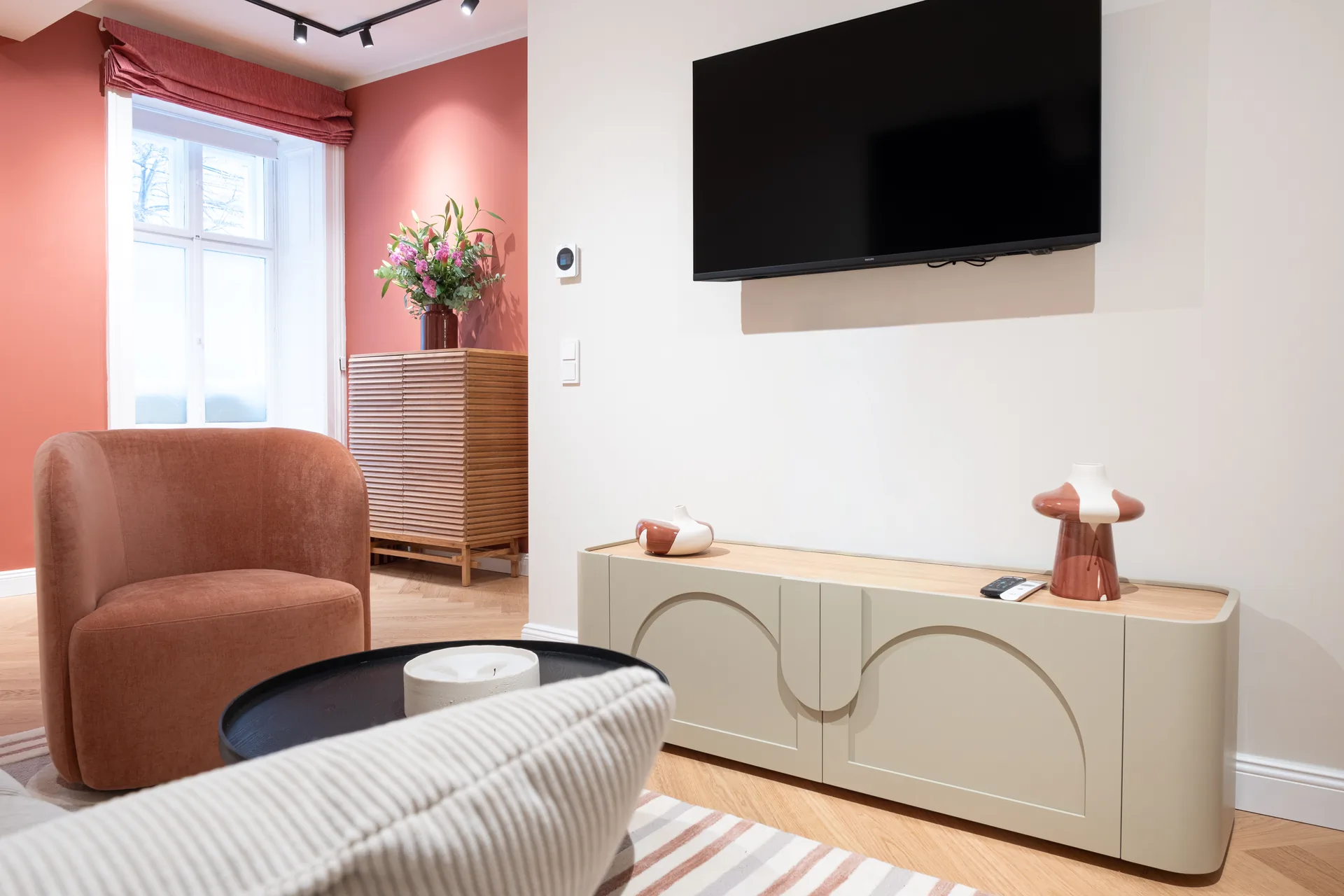
Für die meisten designaffinen Reisenden bei einem 3- bis 5-nächtigen Wien-Aufenthalt bedeutet das MINT Artisan - Wiener Charakter, Galerie-Atmosphäre. Das Artisan ist ein 65 m² großes Apartment für bis zu 4 Gäste, mit terrakottafarbenen Wänden, Fischgrät-Eichenboden, kuratierter Kunst und einer Galerie-Sensibilität, wie sie die meisten Hotelzimmer in diesem Preissegment gar nicht erst anstreben. Ab 185 €/Nacht, mit Aufenthaltsrabatten von 15 % ab 7 Nächten, 20 % ab 14 Nächten und 25 % ab 28 Nächten. 1 Minute Gehzeit vom Markt.
Wenn Sie hochwertiger reisen möchten. Für eine besondere Reise, eine kleine Gruppe oder alle, die eine Dachterrasse einem Hotelrestaurant vorziehen, gibt es die Penthouse Maisonette - zwei Stockwerke, zwei Schlafzimmer, ein unvergesslicher Ausblick. 85 m² für bis zu 4 Gäste, mit raumhohen Fenstern und einer privaten Dachterrasse mit Blick auf das Wiental. Ab 375 €/Nacht.
Bei knapperem Budget. Das Mini Mint ist ein 35 m² großes Studio für bis zu 2 Gäste ab 185 €/Nacht - gleiches Haus, gleiche Gehminute zum Naschmarkt, kleinere Fläche.
| Reisetyp | Empfehlung | Begründung |
|---|---|---|
| Geschäftsreise allein, 2-4 Nächte | Mini Mint oder 4-Sterne-Hotel beim Karlsplatz | Studio mit Küche vs. Einzelhotelzimmer - die Küche gewinnt ab Nacht 3 |
| Paar, 3-5 Nächte, designaffin | MINT Artisan | Charakter + Raum + 1 Minute zum Naschmarkt |
| Familie oder zwei Paare, ab 4 Nächten | Penthouse Maisonette | Zwei Schlafzimmer, Terrasse, genug Raum, sich auszubreiten |
| Vierergruppe, Wochenende | MINT Artisan oder Penthouse Maisonette | 65 m² bzw. 85 m², 4 Gäste; die Double-Wohnungen fassen 3, eine Vierergruppe braucht daher eines dieser beiden |
| Backpacker allein, 1-2 Nächte | Hostel (Wombat's am Naschmarkt) | Direkt am Markt, geselliges Ambiente, günstigster Preis |
| Monatslange Übersiedlung oder Sabbatical | MINT Artisan oder Penthouse mit Resident-Rabatt 25 % | Die Langzeitökonomie spricht deutlich für Serviced Apartments |
Direktbuchung vs. OTAs in der Nähe des Naschmarkts
Die meisten ausländischen Gäste greifen für Wien standardmäßig zu Booking.com oder Expedia - so läuft europäische Reiseplanung üblicherweise ab. Beides funktioniert. Beide verlangen vom Beherbergungsbetrieb jedoch eine Provision, die sich letztlich im Preis niederschlägt - oder in dem, was Ihnen der Gastgeber überhaupt bieten kann.
Guesty, eine Property-Management-Plattform, weist aus, dass Booking.com von Gastgebern rund 10-20 % Provision verlangt (in der Regel etwa 15 % bei den meisten Objekten) und Stand 2024 weltweit über 28 Millionen Objekte gelistet hat (Guesty, 2025). Die Provisionen von Expedia liegen typischerweise zwischen 10 % und 25 %, in Europa häufig in der Mitte dieses Korridors. Booking.com dominiert Europa; Expedia ist in Nordamerika stärker; KAYAK ist ein Meta-Suchaggregator, der aus mehreren OTAs und Direktseiten Daten zieht - nützlich zur Preisfindung, weniger zur Buchung, da die eigentliche Transaktion auf jener Seite stattfindet, zu der KAYAK Sie weiterleitet.
Was Sie bei einer Direktbuchung bei einem kleinen Anbieter tatsächlich erhalten:
- Den vollen Rabatt. Wenn die OTA-Provision beim Beherbergungsbetrieb verbleibt, können die Gastgeber bessere Preise, Langzeitrabatte oder Upgrades anbieten. MINTs Stufen Wochenend+ (-15 % ab 7 Nächten), Fortnight (-20 % ab 14 Nächten) und Resident (-25 % ab 28 Nächten) sind ausschließlich bei Direktbuchung verfügbar.
- Einen echten Ansprechpartner. Booking.com leitet Nachrichten über das interne Postfach weiter; der Gastgeber sieht sie nicht immer sofort. Direktbuchungen erreichen den Gastgeber unmittelbar.
- Flexibilität in Sonderfällen. Wünsche nach frühem Check-in, spätem Check-out, individuelle Zusatzleistungen, Hinweise zu besonderen Anlässen - kleine Anbieter können das direkt umsetzen. OTAs nivellieren das.
Was die OTAs bieten und was eine Abwägung verdient:
- Schnelle, einseitige Stornorückerstattungen bei flexiblen Tarifen.
- Aggregierte Bewertungen über viele Objekte hinweg (hilfreich, wenn Sie keine starke Vorauswahl haben).
- Ein einziges E-Mail mit allen Reisen, wenn Sie viel unterwegs sind.
Wenn Sie bereits wissen, dass Sie ein Serviced Apartment in der Nähe des Naschmarkts wünschen, ist die Direktbuchung im Grunde immer das bessere Geschäft. Wenn Sie noch zwischen Kategorien abwägen, ist Booking.com ein vernünftiges Recherchewerkzeug - buchen Sie anschließend direkt, sobald Ihre Wahl feststeht.
Verfügbarkeit prüfen und direkt buchen →
Häufig gestellte Fragen
Ist das Naschmarkt-Areal für ausländische Gäste sicher?
Ja. Das Naschmarkt-Areal - einschließlich Mariahilf (6.) und Wieden (4.) - zählt zu den zentralen und gut überwachten Bezirken Wiens. Es ist tagsüber und abends belebt - der Markt schließt werktags um 21:00 Uhr, in den umliegenden Lokalen und Bars herrscht bis spät reger Betrieb. Übliche urbane Vorsicht ist angebracht (Acht geben auf Taschendiebe im dichten Markttrubel, besonders samstags während des Flohmarkts), doch Wien rangiert konstant unter den sichersten Großstädten Europas, und der 6. Bezirk ist schlicht ein Wohnviertel und keine touristische Enklave.
Sollte ich meine Naschmarkt-Unterkunft über Booking.com, Expedia oder direkt buchen?
Für ein Hotel ist Booking.com oder Expedia üblich; die Preisparität liegt meist innerhalb weniger Prozent gegenüber der Direktbuchung. Für ein Serviced Apartment oder eine Boutique-Pension ist die Direktbuchung deutlich vorteilhafter - der Anbieter behält die 10-20 %, die sonst an die OTA gingen (Guesty, 2025), was sich in Langzeitrabatten (etwa 15/20/25 % ab 7/14/28 Nächten bei MINT), Flexibilität beim frühen Check-in und in einem echten Ansprechpartner niederschlägt, der auf Ihre Nachricht antwortet.
Wie lang ist der Mindestaufenthalt bei MINT Vienna?
Zwei Nächte. Wien zeigt sich nicht in vierundzwanzig Stunden - der erste Tag ist zum Ankommen, der zweite zum Da-Sein. Alle fünf MINT-Apartments arbeiten mit zwei Nächten Mindestaufenthalt.
Ist Frühstück inkludiert?
Nein - und das ist Programm. Die MINT-Apartments verfügen über voll ausgestattete Küchen einschließlich Kaffeeausstattung. Die meisten Gäste frühstücken direkt am Naschmarkt: Kaffee, Brot, Obst, Käse, Eier - alles binnen 60 Sekunden ab der Haustür.
Wie komme ich vom Flughafen Wien (VIE) zum Naschmarkt?
Am schnellsten geht es mit dem City Airport Train (CAT) bis Wien Mitte, dann mit der U4 eine Station zum Karlsplatz oder zwei Stationen zur Kettenbrückengasse - Gesamtfahrzeit rund 25 bis 30 Minuten. Der ÖBB-Regionalzug (S7) ist langsamer, aber günstiger. Taxis und Fahrdienste kosten 40 bis 55 €.
Was ist der Unterschied zwischen einem Serviced Apartment und einem Airbnb in Wien zum heutigen Zeitpunkt?
Funktional bieten beide eine Küche und die Privatsphäre einer eigenständigen Einheit. Rechtlich und operativ unterscheiden sie sich. Ein konzessioniertes Serviced Apartment (etwa MINT) operiert nach den Vorschriften für gewerbliche Beherbergung, erhebt und führt die Ortstaxe automatisch ab, hält über das gesamte Portfolio einheitliche Qualitätsstandards und unterliegt nicht der 90-Tage-Jahresobergrenze, die seit 1. Juli 2024 für Wiener Kurzzeitvermietungen gilt (FWP Rechtsanwälte, Juli 2024). Ein Inserat im Airbnb-Stil ist eine private Vermietung, häufig von einer Einzelperson betrieben, und operiert möglicherweise außerhalb der 90-Tage-Regel. Das praktische Risiko für Sie als Gast ist gering, aber nicht null - am häufigsten zeigt es sich als kurzfristige Stornierung, wenn ein Gastgeber an eine regulatorische Grenze stößt.
Mariahilf oder Wieden - auf welcher Seite des Marktes sollte ich nächtigen?
Wenn Sie Einkaufen, Kaffeehausbesuche und unabhängige Restaurants konzentriert in Gehweite wünschen, wählen Sie den 6. Bezirk (Mariahilf). Wenn Sie ein ruhigeres, wohnliches Umfeld und etwas schnellere Verbindung in die Innere Stadt bevorzugen, ist der 4. Bezirk (Wieden) die bessere Wahl. Beide bringen Sie binnen 10 Minuten zum Naschmarkt, zur Secession und zur Wiener Staatsoper.
Hat der Naschmarkt sonntags geöffnet?
Die Marktstände selbst sind sonntags geschlossen. Die Restaurants am Naschmarkt sind geöffnet und sonntags besonders für den Brunch beliebt. Der Flohmarkt findet ausschließlich am Samstagvormittag statt (06:30-14:00 / 15:00 Uhr). Die neue Grünfläche Naschpark ist jeden Tag zugänglich.
Muss ich die Tourismusabgabe separat zahlen, oder ist sie inkludiert?
Das hängt vom Anbieter ab. Das Wiener Recht verpflichtet jeden Beherbergungsbetrieb, klar auszuweisen, ob der Preis die Ortstaxe enthält - achten Sie auf „incl. local tax" oder „inkl. Ortstaxe" im Inserat. Bei MINT wird die Ortstaxe bei der Buchung berechnet und gesondert ausgewiesen. Der aktuelle Satz beträgt 3,2 % bis 30. Juni 2026, steigt ab 1. Juli 2026 auf 5 % und ab 1. Juli 2027 auf 8 % (Stadt Wien, Stand Mai 2026). Bei einem typischen Aufenthalt ergibt das je nach Datum rund 2,50 € bis 8 € pro 100 € Zimmerpreis.
Quellen
- Vienna 2025: Best Year Ever for Tourism with 20 Million Overnight Stays - Wien Tourismus, Jänner 2026
- Vienna Tourism Reports Significant Overnight Stay Growth at the Start of 2026 - Aviation.Direct, März 2026
- Wieder Höchstwert: 157 Mio. Nächtigungen im Jahr 2025 - Statistik Austria, Jänner 2026
- Local Tax - Account, Declaration, Calculation - Stadt Wien (wien.gv.at)
- Ab 2026 werden Gebühren erhöht: Ortstaxe, Parkgebühren und Öffi-Tickets - Stadt Wien, September 2025
- Is there a hotel or tourism tax in Vienna? - Visiting Vienna, 2025/2026
- The Vienna Naschmarkt - Wien Tourismus (wien.info)
- More than 50,000 Plants: Vienna Snack Park Opens - Vienna.at, September 2025
- Naschmarkt Vienna 2026 - The Ultimate Guide - Naschmarkt-wien.at, 2026
- Naschmarkt Guide: Vienna's Famous Market - Vienna Itinerary, November 2025
- 6 (+6) reasons to love and spend time with Vienna's 6th district - Vienna Würstelstand
- Living in Vienna: How to Choose a District - Expatica, Dezember 2025
- Local's Guide to Wieden, the 4th District of Vienna - Connecting Vienna, 2024
- 8 Differences Between Hotels and Serviced Apartments - Mews, 2024
- Vienna Airbnb Data 2025: Revenue, Occupancy & ROI Insights - Airbtics, März 2026
- Vienna Airbnb Data 2026: Occupancy, Revenue & STR Market Report - AirROI, 2026
- Airbnb Rules in Vienna - Airbtics, August 2025
- New Rules for Short-Term Rentals from July 2024 in Vienna - Fellner Wratzfeld & Partner, Juli 2024
- The Global Hotel Alliance Reveals Emerging Travel Trends - Hospitality News Magazine, Februar 2026
- New Fare Structure from 1 January 2026 - Wiener Linien, November 2025
- Booking.com vs Expedia: Which Platform Is Better for Hosts? - Guesty, 2025
- Vienna Hotel Market Spotlight YE June 2025 - Hospitality Net / HVS / Cushman & Wakefield, August 2025
Zuletzt aktualisiert: Mai 2026. Christian, Gastgeber & Gründer - MINT @Naschmarkt.