Vienna to Budapest is an easy trip to plan and a long one to do in a single day. The fastest sensible way is the train: a Railjet or EuroCity leaves Vienna Hauptbahnhof (the main station) roughly every hour and reaches Budapest in about 2 hours 37 minutes, city centre to city centre. That makes a day trip doable, but only if you commit to an early train out and a late one back. For most travellers this is the route where an overnight most often earns its keep. Either way, the smart move is to keep one base in Vienna and treat Budapest as a side trip, not a second hotel check-in. And no, there is no passenger boat any more: that service stopped in 2017.
What you'll find on this page
- The fastest way from Vienna to Budapest, and the honest verdict on each mode
- Train fares and times for ÖBB Railjet, MÁV EuroCity and RegioJet, with 2026 prices
- Bus options (FlixBus and RegioJet), and the one booking trap to avoid
- Why there is no Vienna to Budapest boat, and what replaced it
- Driving: distance, Austrian and Hungarian vignettes, and the current border rules
- Day trip or overnight, and how to keep your Vienna base either way
The honest answer: take the train, and here is the verdict by mode
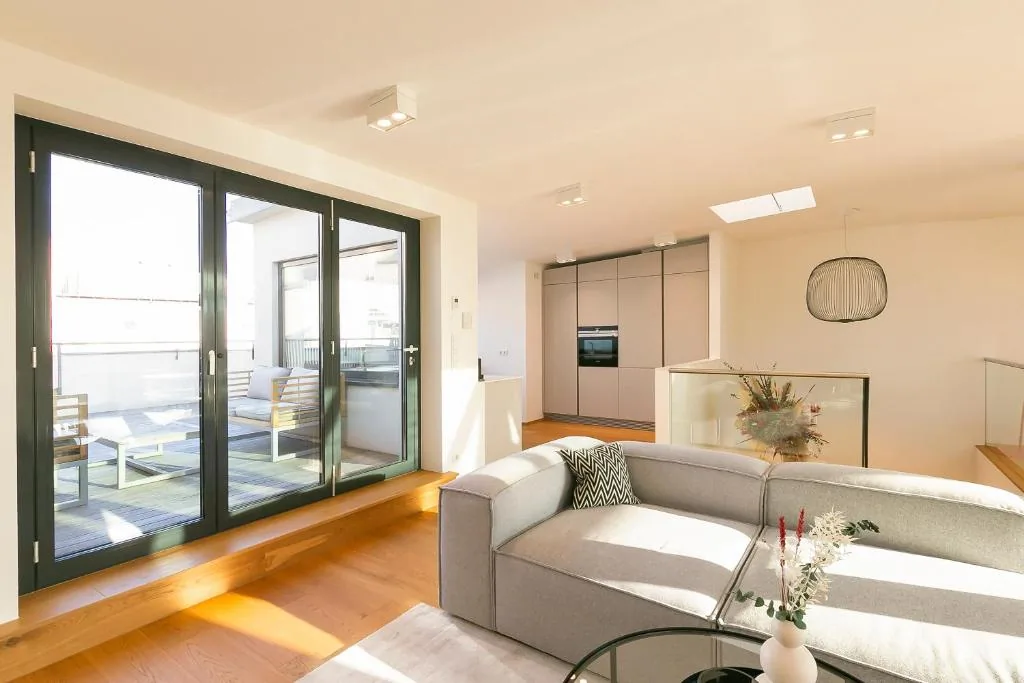
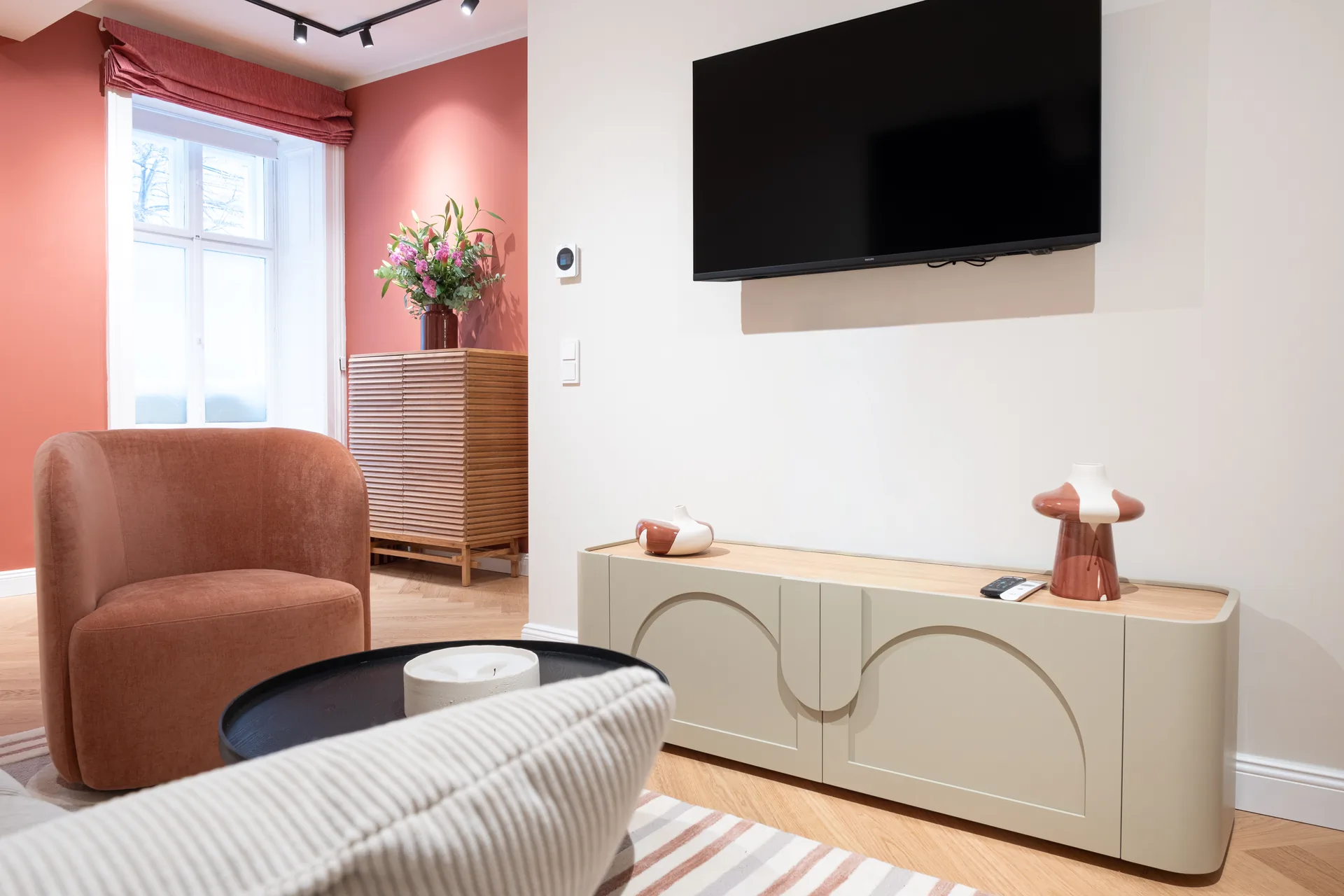
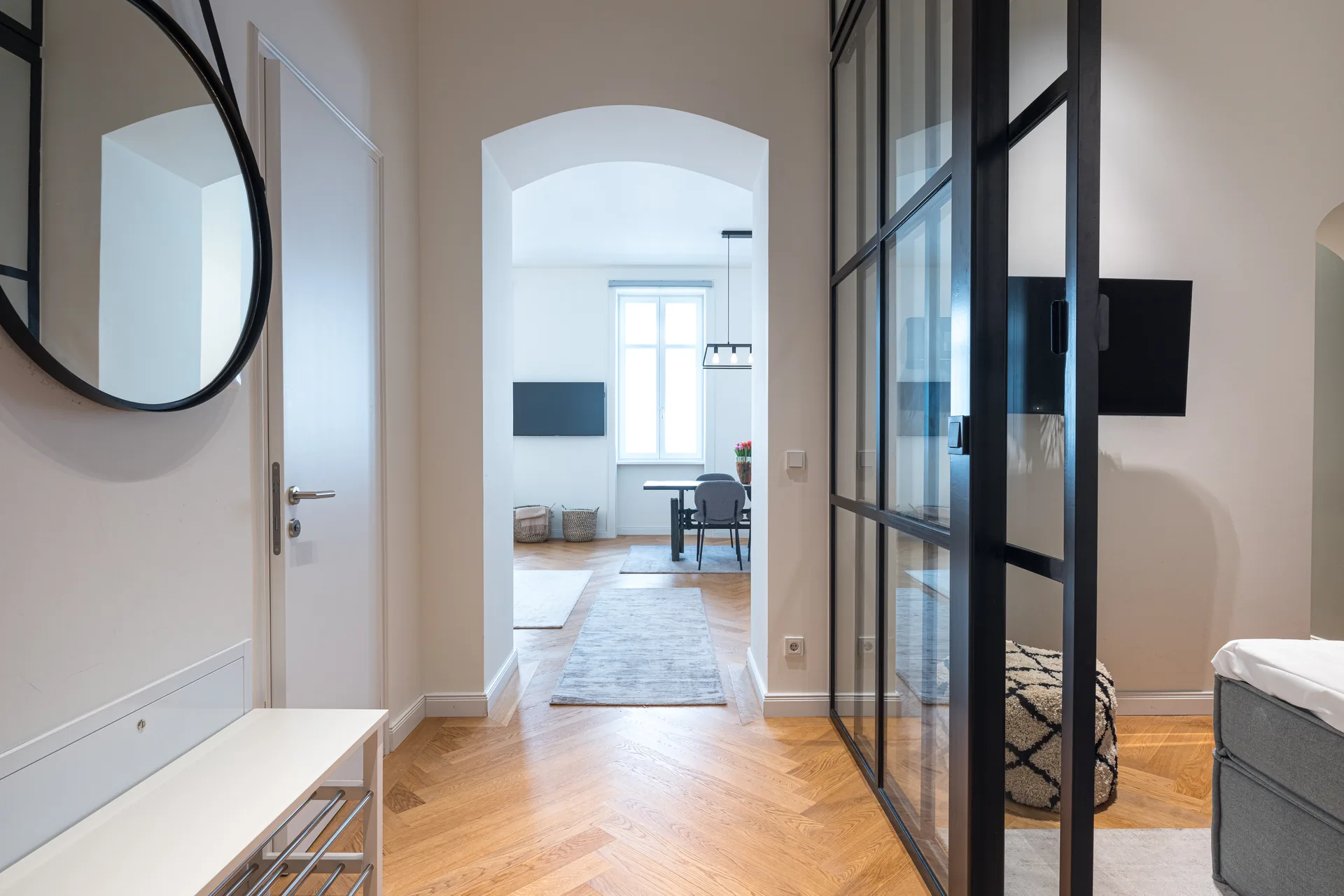
If you are basing yourself in Vienna, as most visitors on a Danube trip do, Budapest is the middle case among the classic day trips. It sits between the easy wins and the honest nos: Bratislava is barely an hour away, while Prague is close to four hours each way and, for most people, a genuine overnight rather than a day trip. Budapest is in between, doable in a day but not effortless. For the wider picture of which excursions are worth the trip, see our Day Trips from Vienna guide; this article goes deep on the single Vienna to Budapest route. If you are staying with us at MINT Vienna, the same logic applies, and your apartment stays yours while you are away.
Across every mode, the train wins on speed and consistency. The bus is close behind on time, often cheaper, and more flexible on where you board. Driving is only worth it if you want to stop along the way or continue past Budapest. The boat, the option people still ask about, no longer exists.
| Mode | Time each way | Typical fare (2026) | Worth it as a day trip? |
|---|---|---|---|
| Train (ÖBB Railjet + MÁV EuroCity) | about 2h37, hourly | from €13 to €19.90, 2nd-class advance (RegioJet from €9) | Yes, the default choice |
| Bus (FlixBus; RegioJet varies) | from 2h50 (FlixBus) | from about €9 to €10, demand-based | Yes, if the schedule fits |
| Boat | no service | not available | No, discontinued since 2017 |
| Car | about 2.5h (230 to 250 km) | fuel plus two vignettes (about €12.80 in Austria, 6,900 HUF in Hungary for 10 days) | Only if you want stops or flexibility |
The short decision rule: take the first fast train out and one of the last back and you get roughly 5 to 7 hours on the ground, enough for a real look at the city. If you want Budapest unhurried, or if the only bus or car time that suits you would eat into that window, stay one night and come back to Vienna the next day.
Bottom line: A Vienna to Budapest day trip works if you treat it as a long day and start early. If you want to see Budapest properly rather than quickly, book one overnight and keep Vienna as your base for the rest of the stay.
The train: ÖBB Railjet, MÁV EuroCity and RegioJet
The train is the reason a Budapest day trip is realistic at all. According to ÖBB's own Budapest train page, "from Vienna, you can travel by train to the Hungarian capital every hour." The independent rail-fare reference Seat61 clocks those Railjet and EuroCity services at 2 hours 37 minutes from Vienna Hauptbahnhof to Budapest Keleti, with a stop at Budapest Kelenföld and around 20 departures a day.
Three operators share this corridor, and it helps to know the difference:
- Railjet (RJX) is ÖBB's Austrian service.
- EuroCity (EC) is the equivalent run by MÁV, the Hungarian railway.
- RegioJet (RJ) is a separate private operator that runs both trains and buses on this route. Keep the two products apart when you book.
Fares depend on how far ahead you book. Seat61 lists ÖBB advance fares from €19.90 in second class, €29.90 in first and €44.90 in business; MÁV advance fares start lower, from €13 in second class; and RegioJet's train fares start at €9 for its Low Cost bucket, rising to €15.90 for Business. Book late and pay the fully flexible walk-up fare, and second class jumps to €52.70. The discounted seats are limited: ÖBB's Sparschiene Hungary fare (the advance-saver ticket) is bookable up to 180 days ahead, and the cheapest ones sell first.
| Operator / service | 2nd class (advance) | 1st class (advance) | Notes |
|---|---|---|---|
| RegioJet train | from €9 | four fare buckets to €15.90 | Cheapest advance fares; separate operator |
| MÁV EuroCity | from €13 | from €27 | Hungarian Railways |
| ÖBB Railjet | from €19.90 | from €29.90 | Book Sparschiene early |
| Full-flex (any) | €52.70 | €86.10 | Walk-up, fully flexible |
Local tip: Book ÖBB's Sparschiene Hungary fare as early as you can, up to 180 days ahead. There is a limited quota of cheap seats per train, so the €9 to €19.90 advance prices go first and the walk-up fare is roughly three times higher.
The bus: FlixBus and RegioJet
If the train is sold out or the timing is wrong, the coach is a solid second choice, and sometimes the cheapest. FlixBus's own timetable puts its fastest run at 2 hours 50 minutes, with 29 departures a day between 01:25 and 23:45. Fares start from around €9 to €10 for early, off-peak bookings but climb fast closer to travel and on popular departures. Check the live fare on FlixBus before you commit to a date.
The bus also beats the train on where you board. FlixBus picks up at four points in Vienna, including Erdberg (the Vienna International Busterminal), the Hauptbahnhof at Südtiroler Platz, Westbahnhof and Karlsplatz, and it stops at four points in Budapest, including Kelenföld and Keleti station itself. The booking aggregator Busbud counts 84 buses a day across four operators (FlixBus, BlaBlaCar Bus, RegioJet and Arda Tur), with an average duration of 3 hours 10 minutes.
That average hides a trap. CheckMyBus lists RegioJet's coach running from Vienna Südtirolerplatz, by the Hauptbahnhof, to Budapest Népliget, but durations vary a lot by departure. Some run in a few hours, while slower or overnight and connecting services can take 5 to 7 hours or more: one listed RegioJet departure leaves at 22:50 and arrives at 06:05. Check the specific departure time before booking, because the operator name alone will not tell you which service you are getting.
Watch out: With the bus, the operator name tells you little about the journey time. Book the wrong RegioJet departure and a "three-hour" coach becomes a seven-hour overnight. The train's flat hourly 2h37 has no such trap.
The boat that stopped running in 2017
People still search for a Vienna to Budapest boat, or the old hydrofoil down the Danube. It is not an option any more. MAHART PassNave, the Hungarian Danube passenger operator, lists no scheduled Vienna line anywhere in its current 2026 route list; its only Vienna entry is a one-off program sailing, not a regular service. The operator told the travel blog Vienna Unwrapped, back in 2017, that it does "not operate the Budapest to Vienna regular service any more." Nothing has replaced it since.
Key fact: There has been no scheduled passenger boat or hydrofoil between Vienna and Budapest since 2017. If a listing claims otherwise, it is out of date. The train is the fast, realistic way down the Danube.
Driving to Budapest: distance, vignettes and the border
Driving makes sense only if you want to stop along the way or carry on past Budapest. The distance is about 230 to 250 km depending on your exact start and finish; a first-person test run published by Vienna Unwrapped covered roughly 230 km each way in about 2.5 hours, arriving around 10:30. That is no faster than the train once you add parking at both ends.
You also need two motorway vignettes, one for each country. According to Austrian vignette price trackers, the 2026 10-day digital vignette runs about €12.80 for a car. Confirm the current price at shop.asfinag.at before you drive, since vignette prices are reviewed annually. For Hungary, the official e-matrica portal lists the D1 car category at 6,900 HUF for 10 days, or 5,550 HUF for a single day, valid from 1 January 2026; the same figures appear on independent vignette listings. Both are digital and bought online by number plate, so there is no sticker to apply.
One more thing catches drivers out: the Austria to Hungary crossing is not currently a drive-straight-through open border. The Austrian federal government states that until 15 September 2026, the border with Hungary may only be crossed at designated crossing points, and you must carry a passport or ID card. This is a live, changeable policy: an earlier travel-authorisation note had put the end date at June 2026, so check again close to your travel dates. The ID rule applies whatever your mode, so carry a passport or ID card on the train and bus too.
Day trip or overnight? The honest call
Opinion is split, and it is worth being honest about that. The same first-person account on Vienna Unwrapped, roughly 2.5 hours each way and about six hours on the ground, called it "six hours of epic sightseeing" and felt it covered as much as a previous two-day visit. On the Rick Steves travel forum, the lean is the other way. "Your trip should be overnight and even that is too little for Vienna," one contributor wrote, while another put the day-trip maths plainly: "over five hours on the train would really take a bite out of your day."
Both are right, because they want different things. Here is the way to decide:
- A day trip works if you take the first fast train out (well before 08:00) and one of the last back, giving you 5 to 7 hours in the city, and you are happy with a highlights pass: the Danube embankment, the Castle district, one thermal bath or one long lunch.
- An overnight is better if you want the baths without a clock, dinner and a night view of the Parliament, or if the only train or bus times that suit you leave less than five hours on the ground.
Budapest, unlike Bratislava, is not a half-day town, and unlike Prague it is not so far that a day trip is silly. It is the honest middle: doable in a day, better in two.
Your base stays in Vienna: the base-camp maths
Here is the part most route guides skip. Whether you day-trip to Budapest or stay one night, you do not need to move house. You keep one apartment in Vienna and travel out and back from it. Two nights, minimum. Vienna does not reveal itself in twenty-four hours, and that same principle is what turns a Budapest side trip into an easy day out rather than a full logistical reset.
The numbers make the case. Want a base a minute from the Naschmarkt (Vienna's open-air market) for the whole trip? Our Double MINT apartment is 55 m², sleeps 3 and starts at €205 a night. Book 7 nights or more and the Wochenend+ rate (the 7-plus-night tier) takes 15% off: seven nights runs about €1,220 net instead of €1,435, plus Vienna's Ortstaxe (accommodation tax), which the City of Vienna raised to 5% from 1 July 2026, up from 3.2%, a rise also reported by Salzburger Nachrichten. Travelling solo or on a budget, Mini MINT is 35 m² and starts at €185, on the same discount ladder. Either way, a full kitchen means a 05:00 coffee before the first train, and a washing machine means you come back from an overnight to clean clothes, not a laundry bag.
Getting to the train from the Naschmarkt is quick: from Kettenbrückengasse on the U4, one stop to Karlsplatz, then the U1 straight to Hauptbahnhof, where every Budapest train departs. It is a door-to-platform run of well under half an hour.
Ready to pick dates? You can check availability and book direct with no platform fees, keep Vienna as your base, and let Budapest be the easy day out.
Frequently asked questions
How long does the train from Vienna to Budapest take?
The fastest trains, ÖBB Railjet and MÁV EuroCity, run from Vienna Hauptbahnhof to Budapest Keleti in about 2 hours 37 minutes, roughly every hour, with around 20 departures a day. That consistent hourly timetable is what makes a same-day return realistic.
What does a train ticket from Vienna to Budapest cost in 2026?
Advance second-class fares start at €9 with RegioJet, €13 with MÁV and €19.90 with ÖBB. First class runs from €27 to €29.90. If you book late, the fully flexible walk-up fare is €52.70 in second class. Book ÖBB's Sparschiene up to 180 days ahead for the lowest prices, as the cheap seats are limited per train.
Is there a boat from Vienna to Budapest?
No. The regular passenger boat and hydrofoil down the Danube stopped in 2017, and MAHART PassNave lists no scheduled Vienna service in its current route list. If you see a boat option advertised, it is out of date. Take the train.
How long is the bus from Vienna to Budapest, and what does it cost?
FlixBus is the fastest coach at about 2 hours 50 minutes, with 29 departures a day. Fares start from around €9 to €10 for early bookings and rise with demand. Across all operators the average is 3 hours 10 minutes, and some RegioJet services run much longer, so check the specific departure time rather than just the operator name.
Can you visit Budapest as a day trip from Vienna?
Yes, but it is a long day. Take an early train out and a late one back and you get roughly 5 to 7 hours in the city, enough for the main sights. If you want Budapest unhurried, an overnight is the better call. Either way, you can keep your Vienna base for the rest of the trip.
How far is Budapest from Vienna by car, and do I need a vignette?
It is about 230 to 250 km and roughly 2.5 hours each way. You need two motorway vignettes: Austria's 10-day digital vignette is about €12.80, and Hungary's D1 e-matrica is 6,900 HUF for 10 days or 5,550 HUF for a single day. Both are bought online by number plate, with no sticker to apply.
Do I need my passport to cross the Austria to Hungary border?
Yes, carry a passport or national ID card. Austria has temporary border controls with Hungary in place until at least 15 September 2026, and you can only cross at designated points. This is a changeable policy, so check again close to your travel date. The ID rule applies whether you go by train, bus, or car.
Which train is best: Railjet, EuroCity or RegioJet?
All three run the same hourly corridor in a similar time. Railjet is ÖBB's Austrian service and EuroCity is MÁV's Hungarian one; they share the timetable and fare bands. RegioJet is a separate operator with the cheapest advance train fares. Pick on price and the departure time that suits you.
Is Budapest better as a day trip or an overnight?
Opinion is mixed. A well-timed day trip can cover the highlights in about six hours on the ground. But many travellers wish they had stayed the night to enjoy the thermal baths and the city after dark. If your schedule leaves less than five hours in Budapest, stay over. Your Vienna apartment stays yours regardless.
Sources
- Travel to Budapest by train, ÖBB, 2026
- Sparschiene Hungary, ÖBB, 2026
- Vienna to Budapest by train, Seat61, 2026
- Bus from Vienna to Budapest, FlixBus, 2026
- Bus Vienna to Budapest, Busbud, 2026
- Bus Vienna to Budapest: compare prices, CheckMyBus, 2026
- MAHART PassNave passenger cruising, MAHART PassNave, 2026
- Hydrofoil Vienna Budapest review and alternatives, Vienna Unwrapped, 2026
- Vienna Budapest day trip test drive, Vienna Unwrapped, 2026
- Fee increases from 2026: Ortstaxe, City of Vienna, 2025
- Vienna raises the Ortstaxe to five percent from 1 July, Salzburger Nachrichten, 2026
- Austria vignette 2026 prices, Fuel-Prices.EU, 2026
- Hungary e-vignette 2026 prices and categories, e-autopalyamatrica.hu, 2026
- Hungarian highway vignette D1 category, Hungary-Vignette.eu, 2026
- Schengen border control status, Oesterreich.gv.at, 2026
- Austria border controls extended to 2026, ETIAS.com, 2025
- Day trip or overnight from Budapest to Vienna, Rick Steves Travel Forum, 2026
Last updated: July 2026. Christian, Host & Founder, MINT @Naschmarkt.