
The best time to visit Vienna is late April to June or September to October for mild walking weather, and January or February for value, balls and music. You should avoid December and August if crowds bother you, and avoid January if you want long days outdoors. Vienna's calendar runs upside down: in 2025 its hotels earned more per room from April to June and from September to November than in July and August, and the least in January and February, right in the middle of the ball season.
Vienna month by month: weather, hotel revenue and what each month is best for (12 months)
| Month | Hotel € per room, 2025 | High / low (°C) | Best for |
|---|---|---|---|
| January | 50.0 | 3.6 / -1.3 | Balls and concerts |
| February | 56.5 | 6.0 / -0.4 | The Opera Ball |
| March | 62.4 | 11.0 / 2.7 | Value before spring |
| April | 98.4 | 17.0 / 6.7 | Walking weather |
| May | 100.5 | 21.2 / 11.1 | Warm days, Festwochen |
| June | 94.3 | 25.0 / 14.7 | Longest days |
| July | 76.3 | 27.1 / 16.4 | Summer sun |
| August | 78.8 | 26.8 / 16.2 | Late summer |
| September | 95.8 | 21.0 / 12.1 | Warm walking days |
| October | 91.8 | 14.7 / 7.6 | Cool walking days |
| November | 93.7 | 8.7 / 3.7 | Markets before December |
| December | 143.5 | 4.1 / -0.4 | Christmas markets |
Sources: hotel revenue per available room, 2025; climate normals 1991 to 2020, GeoSphere Austria.
Revenue per available room is what hotels earn per room across all nights, booked or empty, before breakfast and VAT, so it tracks demand and prices; it is not a room rate, and the 2025 figures are provisional. For what to do once you are here, see our complete Vienna visitor guide.
Is summer the expensive season in Vienna? Not in 2025
No. Every month from April to June and from September to November earned hotels more than July or August, and December was the peak. January and February, the ball months, were the lowest, as they were in 2023 and 2024. So, December aside, spring and autumn are the expensive seasons. Summer changes more from year to year: in 2024 August earned €91.4, level with October and November.
When is the cheapest time to visit Vienna in 2027?
January and February, when Vienna's hotels are also at their emptiest: about 49% full in January 2026 and 53% in February 2026, against about 90% in December 2025.
The quietest weeks have no school holidays and no big balls. The Christmas school holidays end on 6 January 2027 and the first big ball is on 14 January. That leaves 7 to 13 January clear. The last regional semester break ends on 20 February and the Easter holidays start on 20 March, which leaves four weeks free of both.
The date of Easter changes how busy Vienna gets in spring. March 2025 had about 1% fewer guest nights because Easter had been in March the year before, and April 2025 about 15% more, partly because Easter came later. In 2027 Easter Sunday is 28 March.
The Ortstaxe, Vienna's tax on overnight stays, is 5% now and is scheduled to rise to 8% on 1 July 2027; the hotel association has asked the city to suspend that step, so check before you book a stay after June 2027. A January or February 2027 stay is charged 5%. For daily spending, see what a day in Vienna costs.
All 12 months in Vienna: pros, cons and what the Naschmarkt gives you
Our five apartments are a minute from the Naschmarkt, Vienna's open-air food market on the Wienzeile between Getreidemarkt and the Kettenbrücke. Its stalls trade Monday to Saturday; on Sundays only its restaurants open.
January
Vienna in January suits a trip for a ball, a concert or the city at its emptiest, if you can take cold, short days.
Pros:
- The year's lowest hotel revenue: €50.0 per room in 2025.
- Balls from 14 January 2027, including the Philharmonic Ball at the Musikverein on 21 January: €220, on sale from 11 January.
- Ballet evenings at the Staatsoper on 22 and 29 January.
- The Eistraum ice rink on Rathausplatz, announced for 22 January to 7 March 2027; check its site first.
Cons:
- The coldest month: 3.6 °C by day, -1.3 °C at night, snow on the ground about 11 days.
- Sunset around 16:10 on 1 January and 16:50 on the 31st.
From the Naschmarkt: The Musikverein is about 1.4 km from Kettenbrückengasse, our U4 station: 17 to 18 minutes on foot by our estimate.
February
Vienna in February is the Opera Ball month, with hotels nearly as empty as in January.
Pros:
- €56.5 per room in 2025, and the fewest guest nights of any month: 1.08 million.
- The Opera Ball on 4 February, and more Staatsoper ballet evenings on 1, 6, 7 and 11 February.
- The driest month, at 38 mm, with sunset around 17:15 by mid-month.
Cons:
- Still cold: 6.0 °C by day and -0.4 °C at night.
- Opera Ball 2027 entrance costs €435 and went by a raffle that closed in June 2026.
- Austrian school breaks run in three waves, from 1 to 20 February.
From the Naschmarkt: The Staatsoper is about 1.2 km from Kettenbrückengasse, around 15 minutes on foot by our estimate. On Sunday 14 February, Valentine's Day, the market's flower stalls may open from 09:00 to 19:00.
March
Vienna in March works if you want more light than in winter while the hotels are still quiet.
Pros:
- €62.4 per room in 2025, the third-lowest month.
- 1.34 million guest nights in 2025, fewer than any month from April to December.
- 5.1 hours of sun a day, against 2.3 in January.
- The Eistraum is announced to run until 7 March.
Cons:
- Still cool: 11.0 °C by day and 2.7 °C at night.
- The Easter school holidays run from 20 to 29 March 2027.
From the Naschmarkt: Rathausplatz, for the Eistraum's last weeks, is about 2.0 km from Kettenbrückengasse, or 24 to 27 minutes on foot by our estimate.
April
First-time visitors who want to walk everywhere should aim for the second half of April.
Pros:
- 17.0 °C by day and 42 mm of rain, about half of May's.
- 7.3 hours of sun a day, enough for day trips from Vienna.
- Schönbrunn's fountains run from mid-April to mid-October.
- The Vienna City Marathon on Sunday 18 April 2027.
Cons:
- Hotel revenue jumps to €98.4 per room, from €62.4 in March.
- More visitors: 1.78 million guest nights in 2025, against 1.34 million in March.
From the Naschmarkt: Marathon day is a Sunday, so the stalls are shut, but the market's restaurants may open from 09:00 to 21:00.
May
May suits walkers who don't mind rain, though hotels earn more per room than in any month but December.
Pros:
- 21.2 °C by day and 8.0 hours of sun.
- The Wiener Festwochen, a festival of contemporary art, usually runs through May and June.
- Fewer guest nights than April: 1.72 million in 2025.
Cons:
- The wettest month: 79 mm.
- The highest hotel revenue after December: €100.5 per room.
From the Naschmarkt: On Mother's Day, a Sunday in May, the market's flower stalls may open from 09:00 to 19:00 while the rest of the market stays shut.
June
June has the longest days of the year, before the July heat.
Pros:
- 25.0 °C by day and 8.6 hours of sun.
- The Donauinselfest, the Danube Island festival, on 25 to 27 June 2027.
- The Festwochen run into June.
Cons:
- Hotel revenue still at spring level: €94.3 per room, above July and August.
- 70 mm of rain, the third-wettest month.
From the Naschmarkt: The market's restaurants and bars may open until 23:00 from Monday to Saturday, so dinner on a long June evening is a minute from the apartment.
July
July suits visitors who want the hottest, sunniest weather, and hotels earn less per room than in spring.
Pros:
- The sunniest month: 8.8 hours of sun a day.
- €76.3 per room in 2025, below every month from April to June and September to November.
- Fewer guest nights than August: 1.78 million in 2025.
Cons:
- The hottest month: 27.1 °C by day and 16.4 °C at night.
- The second-wettest month, at 78 mm.
From the Naschmarkt: Market rules let the stalls open from 06:00, Monday to Saturday, so you can shop before the heat.
August
August works if school holidays fix your dates, but skip it if crowds bother you.
Pros:
- €78.8 per room in 2025, also below every month from April to June and September to November.
- 8.6 hours of sun a day, and rain on about 8 days, fewer than in May, June or July.
Cons:
- The busiest month after December: 1.89 million guest nights in 2025, with hotels about 78% full.
- Hot: 26.8 °C by day and 16.2 °C at night.
From the Naschmarkt: Kettenbrückengasse is one U4 stop from Karlsplatz, so on a hot evening you can ride instead of walking.
September
September is a good month for a first visit: warm but not hot, and quieter than August.
Pros:
- 21.0 °C by day, 12.1 °C at night, and 6.4 hours of sun.
- Fewer guest nights than August or October: 1.73 million in 2025.
- The fewest wet days of the warm months: about 7 with at least 1 mm of rain.
Cons:
- €95.8 per room in 2025, the fourth-highest hotel revenue of the year.
From the Naschmarkt: On September Saturdays the flea market at the Naschmarkt runs from 06:30 until 15:00 at the latest.
October
Walkers who like cool weather should go in the first half of October, before Schönbrunn's fountains stop.
Pros:
- 14.7 °C by day and 47 mm of rain.
- The lowest hotel revenue of the autumn months: €91.8 per room in 2025.
- Schönbrunn's fountains run until mid-October.
Cons:
- The third-busiest month: 1.86 million guest nights in 2025.
- Cooler evenings and less light: 7.6 °C at night and 4.1 hours of sun a day.
From the Naschmarkt: Stalls may trade until 21:00 on weekdays, but many close between 18:00 and 19:00, so shop before then as the days shorten.
November
November suits a Christmas-market trip without December's crowds, if grey days don't bother you.
Pros:
- The Christmas markets open from 6 November 2026.
- A skating rink at the Rathausplatz Christmas market from 13 November 2026.
- Hotels were about 73% full in November 2025, against about 90% in December.
Cons:
- Grey: 2.2 hours of sun a day and 8.7 °C by day.
- Not cheap: €93.7 per room in 2025, more than July or August.
From the Naschmarkt: On All Saints' Day, 1 November, a public holiday, the market's flower stalls may open from 09:00 to 19:00.
December
December suits a Christmas-market or New Year's Eve trip, and hotels are fuller than in any other month.
Pros:
- Christmas markets until 23 to 26 December, and at Schönbrunn and the Prater until 6 January 2027: see our Vienna Christmas markets 2026 dates.
- The free Silvesterpfad on 31 December, 14:00 to 02:00, from the Freyung to the Neuer Markt.
Cons:
- The fullest month: 2.19 million guest nights in 2025, the only month above two million.
- The highest hotel revenue of the year: €143.5 per room, nearly three times January's.
- The dullest month: 1.8 hours of sun a day.
From the Naschmarkt: On 25 and 26 December the stalls stay shut but the restaurants may open from 09:00 to 21:00, and there is no flea market on Saturday 26 December 2026.
Is Vienna worth visiting in January or February 2027?
They are worth it for the balls, the concerts and the city indoors, as long as you plan your outdoor hours around the light: on 1 January the day is 8 h 26 m long, and Schönbrunn's park closes at 17:30.
The big balls on the 2027 ball calendar, by venue, with our walking times from Kettenbrückengasse:
- Musikverein, 17 to 18 minutes: Philharmonic Ball 21 January, Ball of Industry and Technology 23 January.
- Staatsoper, about 15 minutes: Opera Ball 4 February.
- City Hall, 24 to 27 minutes: Flower Ball 15 January, Ball of Sciences 23 January.
- Hofburg: Confectioners' Ball 14 January, Kaffeesiederball 22 January, Hunters' Ball 25 January, Doctors' Ball 30 January, Lawyers' Ball 6 February, Ukrainian Charity Ball 11 February.
The dress code is a long evening gown, or a tuxedo or tails. The Kaffeesiederball costs €210 for 2027, or €96 for students up to 26, but its online quota has sold out and its tickets include no seat. Flower Ball tickets go on sale online at 11:00 on 11 November 2026. For concerts and opera, check the Staatsoper and Musikverein calendars; tickets for the New Year's Concert on 1 January 2027, under Tugan Sokhiev, went by lottery in February 2026.
Dates, ticket prices and dress codes for 13 balls are in our 2027 ball calendar. By day there is skating at the Eistraum, announced from 22 January, the coffee houses, museums and the aquarium with children and skiing near Vienna, a day trip by train.
Where to stay in any season: 1 minute from the Naschmarkt
From Kettenbrückengasse, the U4 station by our apartments, it is about 550 m on foot to the Theater an der Wien, 1.2 km to the Staatsoper and 1.4 km to the Musikverein by our estimate, and one U4 stop to Karlsplatz. So the Opera Ball and the Musikverein's balls and concerts are a walk home. For the City Hall balls and the Rathausplatz rink, 2.0 km away, a base by Rathausplatz saves the walk.
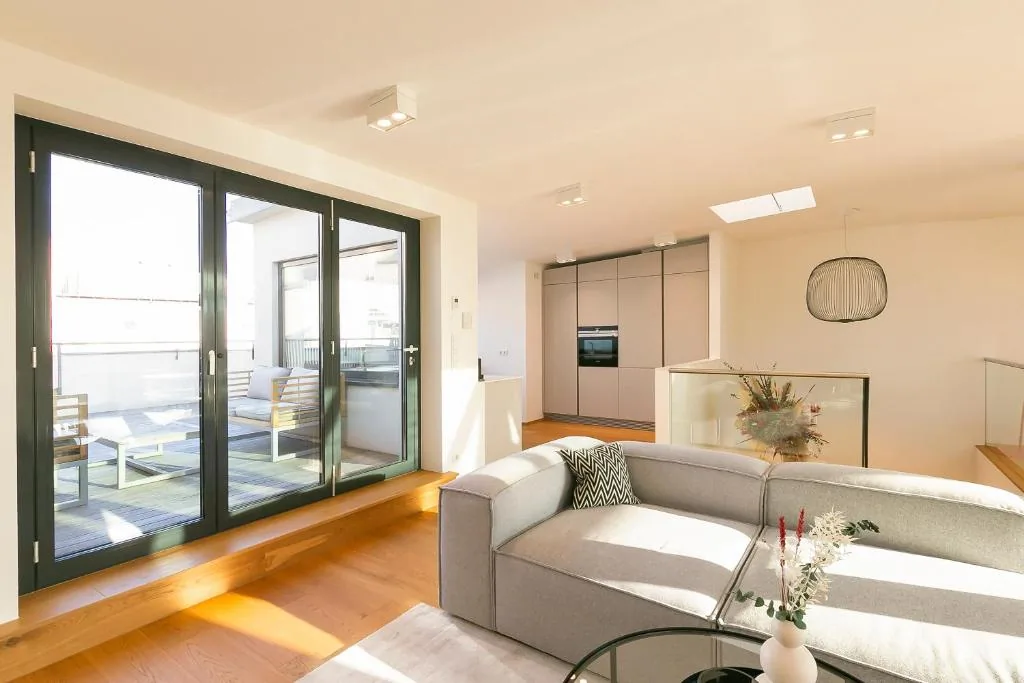
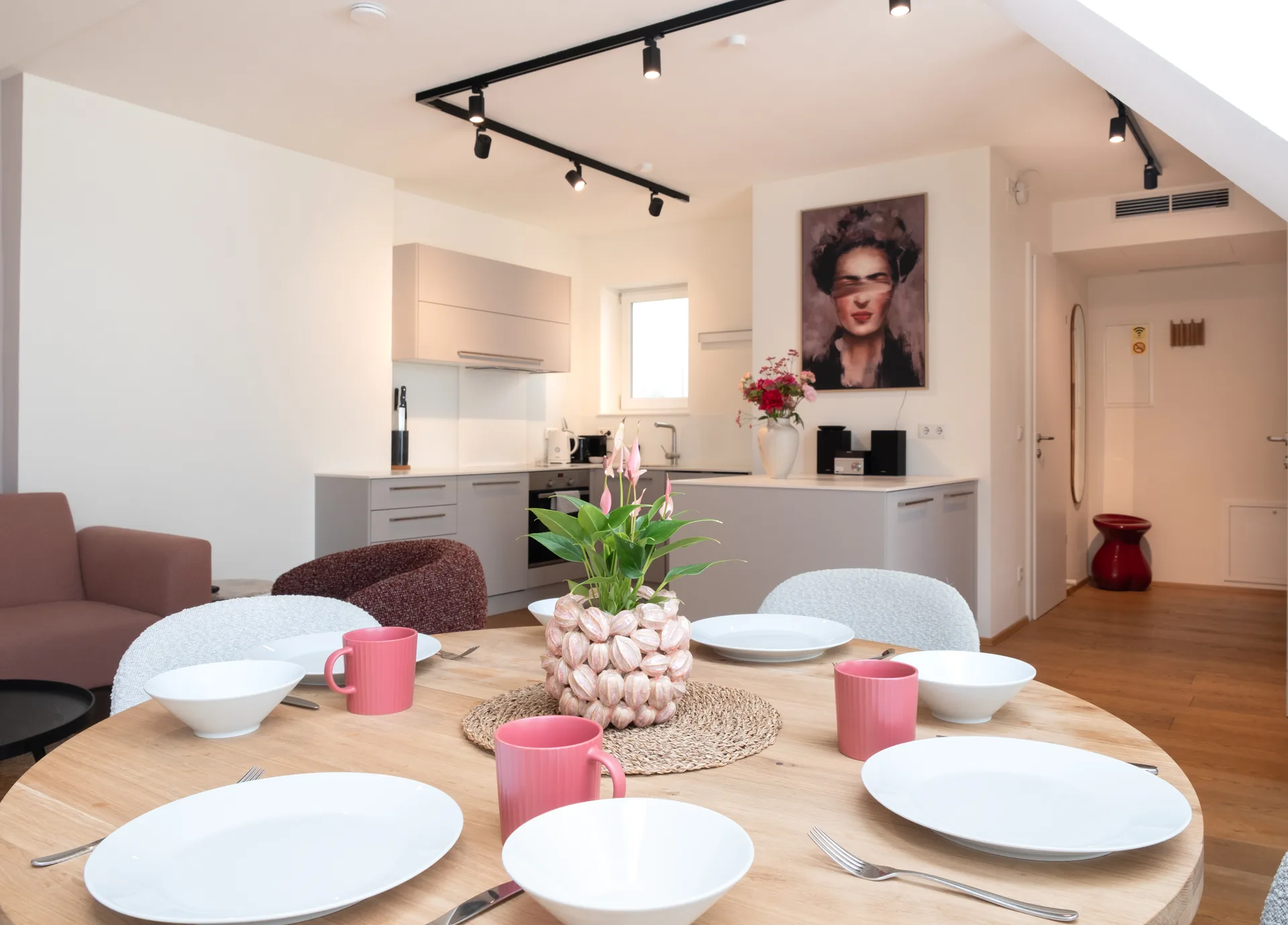
Here for a ball or the opera? Our Double MINT with Balcony is 55 m² for up to 3 guests, from €215 a night, with a full kitchen; the balcony is for the warmer months. For four, the two-bedroom Penthouse Maisonette is 85 m², from €375. You can check dates and book direct.
Frequently asked questions
What is the cheapest month to visit Vienna? January or February: in 2025 hotels earned €50.0 per available room in January and €56.5 in February, against €143.5 in December, but in 2023 and 2024 February was the lower of the two. That is revenue per room, not a nightly price, and the two months were the lowest in all three years.
What is the weather like in Vienna in January? January is the coldest month, averaging 3.6 °C by day and -1.3 °C at night, with 42 mm of rain or snow and 2.3 hours of sun a day. Snow covers the ground on about 11 days, and the sun sets between about 16:10 and 16:50.
What is the weather like in Vienna in February? February averages 6.0 °C by day and -0.4 °C at night, and with 38 mm it is the driest month of the year. It has about 3.7 hours of sun a day, and by mid-February the sun sets around 17:15.
Does it snow in Vienna in winter? Usually a little: on the 1991 to 2020 average, snow covers the ground on about 6 days in December, 11 in January, 9 in February and 3 in March. On about 8 January days the temperature stays below freezing all day.
Can tourists go to a Vienna ball? Yes: the Philharmonic Ball sells tickets at €220 from 11 January 2027 and the Flower Ball online from 11 November 2026, while the Kaffeesiederball's online quota has sold out and Opera Ball entrance, at €435, went by a raffle that closed in June 2026. The dress code is a long evening gown, or a tuxedo or tails.
Is March a good time to visit Vienna? For value, yes: hotels earned €62.4 per room in March 2025, the third-lowest month, and the Eistraum is announced to run until 7 March. It is still cool at 11.0 °C by day, and Austria's Easter school holidays run from 20 to 29 March 2027.
How much is the tourist tax in Vienna in 2027? The Ortstaxe is 5% of the price of your stay now, so a January or February 2027 stay pays 5%. A rise to 8% is scheduled for 1 July 2027, but the hotel association has asked the city to suspend it, so check before booking a later stay.
How do I get tickets for the Vienna New Year's Concert? The Vienna Philharmonic draws them by lottery: applications for the 1 January 2027 concert, under Tugan Sokhiev, ran from 1 to 28 February 2026. The window for the following year has opened in February before but has not been announced yet.
Sources
Our team checks the dates, prices and figures on this page by hand against official sources.
- Hotel revenue per room 2025, Wien Tourismus
- Overnight stays, 2025 annual review, Wien Tourismus
- Climate data 1991 to 2020, GeoSphere Austria
- School holidays 2026/27, Ministry of Education
- Ball season 2027, Vienna Tourist Board
- Philharmonic Ball 2027, Wiener Philharmoniker
- Opera Ball 2027, Wiener Staatsoper
- Kaffeesiederball 2027, organiser
- Naschmarkt opening hours, City of Vienna
- Wiener Eistraum 2027, organiser
- Sunrise and sunset in Vienna, January 2027, timeanddate.com
- Opening times, Schönbrunn Palace Park
- Vienna City Marathon 2027, organiser
- Wiener Festwochen, organiser
- Donauinselfest 2027, organiser
- U4 station list, Wikipedia
- Ortstaxe suspension request, Wirtschaftskammer Wien
Last updated: October 2026. Christian, Host & Founder, MINT @Naschmarkt.