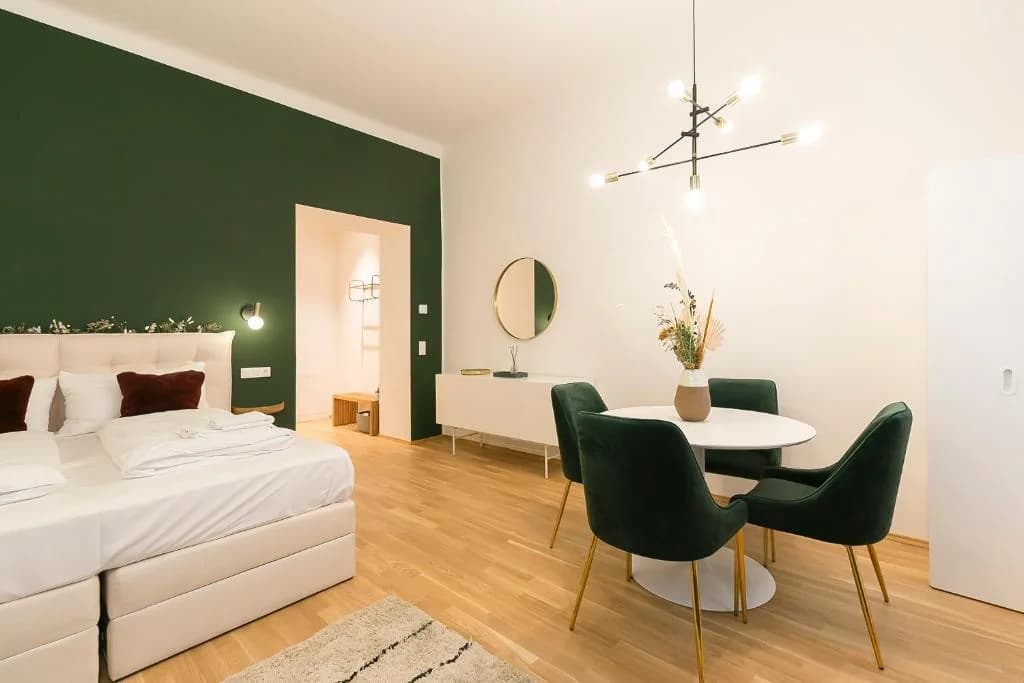
Vienna is mid-priced for a Western European capital — comparable to Paris, clearly cheaper than London and Zurich, and noticeably pricier than Prague or Budapest. For a 2026 visit, plan on roughly €75–€90 per day for a mid-range trip (sit-down meals, a paid museum, a full transit pass), excluding accommodation. A budget traveller using market food, free museums, and tap water can keep it to about €45–€60 per day. This guide covers what things cost, how Vienna compares to other capitals, and where the easy savings are — written for visitors basing themselves around the MINT Vienna boutique apartments at the Naschmarkt in the 6th district.
One number frames it: a monthly public-transport pass costs €51 in Vienna against €231.58 in London — London transit is roughly 354% more expensive, per Numbeo (May 2026, crowd-sourced). Getting around is where Vienna is quietly excellent value.
What you'll find on this page
- A 2026 price table for the things visitors actually buy — coffee, lunch, dinner, beer, museums, transit
- The 2026 changes worth knowing: new transit fares, the rising accommodation tax, and steeper parking
- How Vienna compares to Paris, London, Zurich, Prague, and Budapest, by category
- Concrete ways to do Vienna on a budget, with the 7-day transit-pass maths
- A quick-answer FAQ covering the most common cost questions
What things cost in Vienna (2026)
Below is what a visitor typically pays in 2026, from official operators (Wiener Linien, the museums) and dated crowd-sourced data. The biggest single lever is where you eat: the same Wiener schnitzel (a breaded veal or pork cutlet) runs €10–16 in a neighbourhood restaurant and €20–32 near the major sights.
| Item | Approx. 2026 price | Note |
|---|---|---|
| Coffee — a Melange (Vienna's espresso with steamed milk) or cappuccino | €4.60–€4.71 | €4.60 avg, up to €6+ in a Kaffeehaus (Feb 2026); €4.71 per Numbeo (May 2026) |
| Casual sit-down lunch | €10–€18 | €18 for an inexpensive restaurant meal (Numbeo, May 2026); lighter neighbourhood plates from ~€10 |
| Neighbourhood schnitzel dinner | €10–€16 | Local restaurants €10–16; tourist-area €20–32 (SpendSanity, 2026) |
| Sausage + bread from a Würstelstand (street sausage stand) | €5–€6 | Quick, filling, everywhere (Feb 2026) |
| Half-litre draught beer in a bar | €4.90–€5.50 | €4.90 bar average (Feb 2026) to €5.50 (Numbeo, May 2026); up to €6.90 in tourist spots |
| Supermarket beer (0.5L), self-catering | €1.19–€1.59 | Supermarket and high-street prices sit near the EU standard (Feb 2026) |
| Kunsthistorisches Museum (KHM) admission | €22 | €22 online, €24 on-site; under-19 free (2026) |
| Upper Belvedere admission | €23 | €23 standard adult; under-19 free (2026) |
| Wiener Linien 24-hour transit pass | €10.20 | €10.20 physical, €9.70 digital (from 1 Jan 2026) |
| Wiener Linien 7-day transit pass | €28.90 | €28.90 physical, €25.20 digital (from 1 Jan 2026) |
Add those up the way a mid-range day runs — a Melange, a casual lunch, a neighbourhood schnitzel dinner, a 24-hour transit pass, one paid museum (KHM at €22), and a drink — and you land at roughly €75–€90 excluding accommodation. Skip the paid museum, eat from the market and a Würstelstand, and the same day drops to about €45–€60.
Watch out: Three 2026 changes affect what you pay. First, Wiener Linien restructured its fares on 1 January 2026, and the standalone 48-hour and 72-hour transit passes were discontinued — it is now the 24-hour or 7-day pass. (The separate Vienna City Card still sells 48-hour and 72-hour bundles that combine transit with museum and attraction discounts.) Second, Vienna's accommodation tax (Ortstaxe) rises from 3.2% to 5% on 1 July 2026, with a further rise to 8% planned for 1 July 2027. On a €100 room the current rate adds approximately €2.52 per night, per VisitingVienna.com; this is usually already included in the price you see on booking sites. Third, on-street parking rose 30% in January 2026 and, from 1 July 2026, costs €1.70 per 30 minutes via parking voucher — another reason most visitors skip the car entirely.
Is Vienna cheaper than other European capitals?
It depends which capital. Vienna sits mid-pack — on par with Paris, clearly below London and Zurich, and clearly above Prague and Budapest. The comparison below uses Numbeo's crowd-sourced data (May–June 2026), shown by category, because category prices are what a visitor actually feels.
| City vs Vienna | Overall direction (excl. rent) | A telling category |
|---|---|---|
| Paris | Near-parity — Paris ~3.7% more expensive | Transit pass €90 in Paris vs €51 in Vienna; inexpensive meal €15 vs €18 |
| London | Vienna clearly cheaper — London ~16.7% more expensive | Transit €231.58 vs €51; inexpensive meal €23.16 vs €18 |
| Zurich | Vienna much cheaper | Cappuccino €6.25 vs €4.71; transit €95.57 vs €51; 1-bedroom rent €2,589 vs €1,131 |
| Prague | Vienna more expensive | Beer €2.69 vs €5.50; meal €10.33 vs €18; transit €22.36 vs €51 |
| Budapest | Vienna more expensive | Meal €11.27 vs €18; transit €25.35 vs €51 |
Two patterns stand out. Vienna's transit is among the cheapest in Western Europe — the €51 monthly pass undercuts Paris (€90), Zurich (€95.57), and London (€231.58) by a wide margin. And the further west you compare, the better Vienna looks: in a different league from Zurich, clearly below London, level with Paris. Head east to Prague or Budapest, though, and Vienna is the pricier choice — a meal is about €18 here against roughly €10–11 there.
For day-to-day living rather than a short trip, Vienna's city-centre one-bedroom rent runs about €1,131 a month against an average net salary of €2,876 (Numbeo, May 2026) — close to Prague's rent and far below Zurich's. If you're weighing a longer stay or a move, our extended-stay relocation guide covers rent, utilities, and setup costs in depth; this guide stays focused on a short trip.
How to do Vienna on a budget
You can enjoy Vienna well on little, because what it does best — walking the inner districts, drinking the water, looking at art — is cheap or free.
Use the 7-day pass, not multiple day passes. For a trip of three days or more, the 7-day pass at €25.20 digital (€28.90 physical) beats stacking three or more 24-hour passes at €10.20 each, and covers every U-Bahn (metro), tram, and bus for a week. Skip the rental car: parking is rising in 2026 and the network reaches everywhere you'd want to go.
See art for free, or close to it. The Wien Museum's permanent collection at Karlsplatz is free for everyone, and KHM and Belvedere admission is free for all visitors under 19 — a real saving for families. The Schönbrunn and Belvedere palace gardens are free to walk (only the interiors are charged). The Vienna State Opera sells standing-room tickets from as little as €13 on the day, according to VisitingVienna.com — check the State Opera website for current prices. For the full attractions picture, our Complete Vienna Activities Guide covers them in depth; this just flags the budget angles.
Eat at the Naschmarkt and drink the tap water. The Naschmarkt — Vienna's open-air food market, around 130 stalls plus a market hall along the Wienzeile between Karlsplatz and Kettenbrückengasse — is a low-cost lunch in any direction: Turkish, Greek, Middle Eastern, traditional Viennese. Stalls open from 06:00; the market is closed Sundays (restaurants stay open). For more dining options, see our Where to Eat in Vienna guide. And don't buy bottled water: Vienna pipes Alpine spring water (Hochquellwasser) to more than 1,800 public drinking fountains across the city — free, safe, and genuinely good. A refill saves a couple of euros a day.
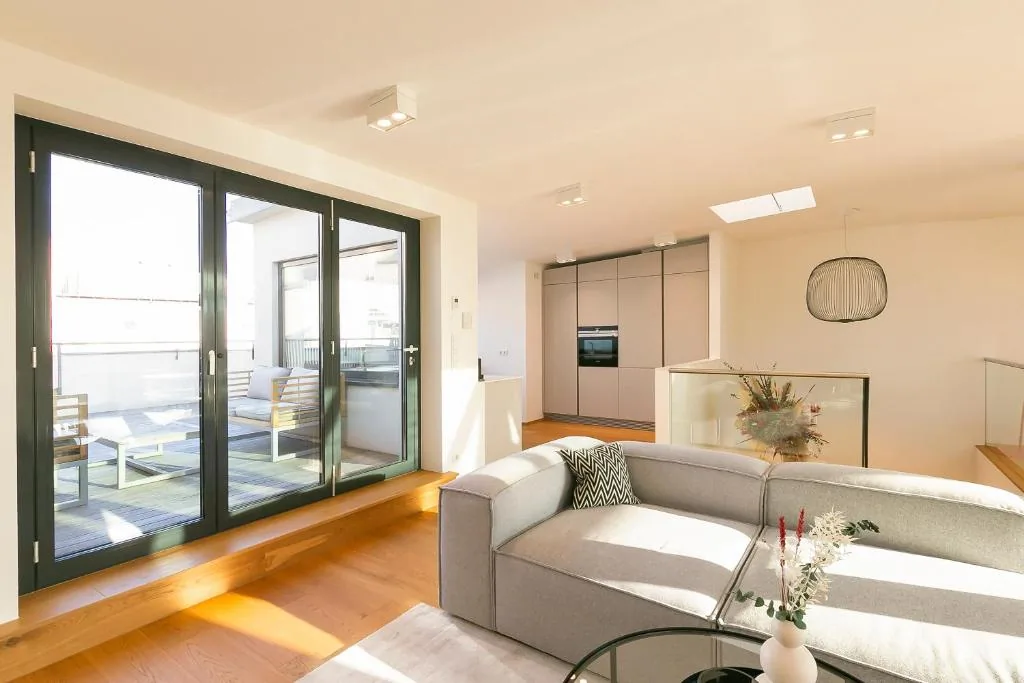
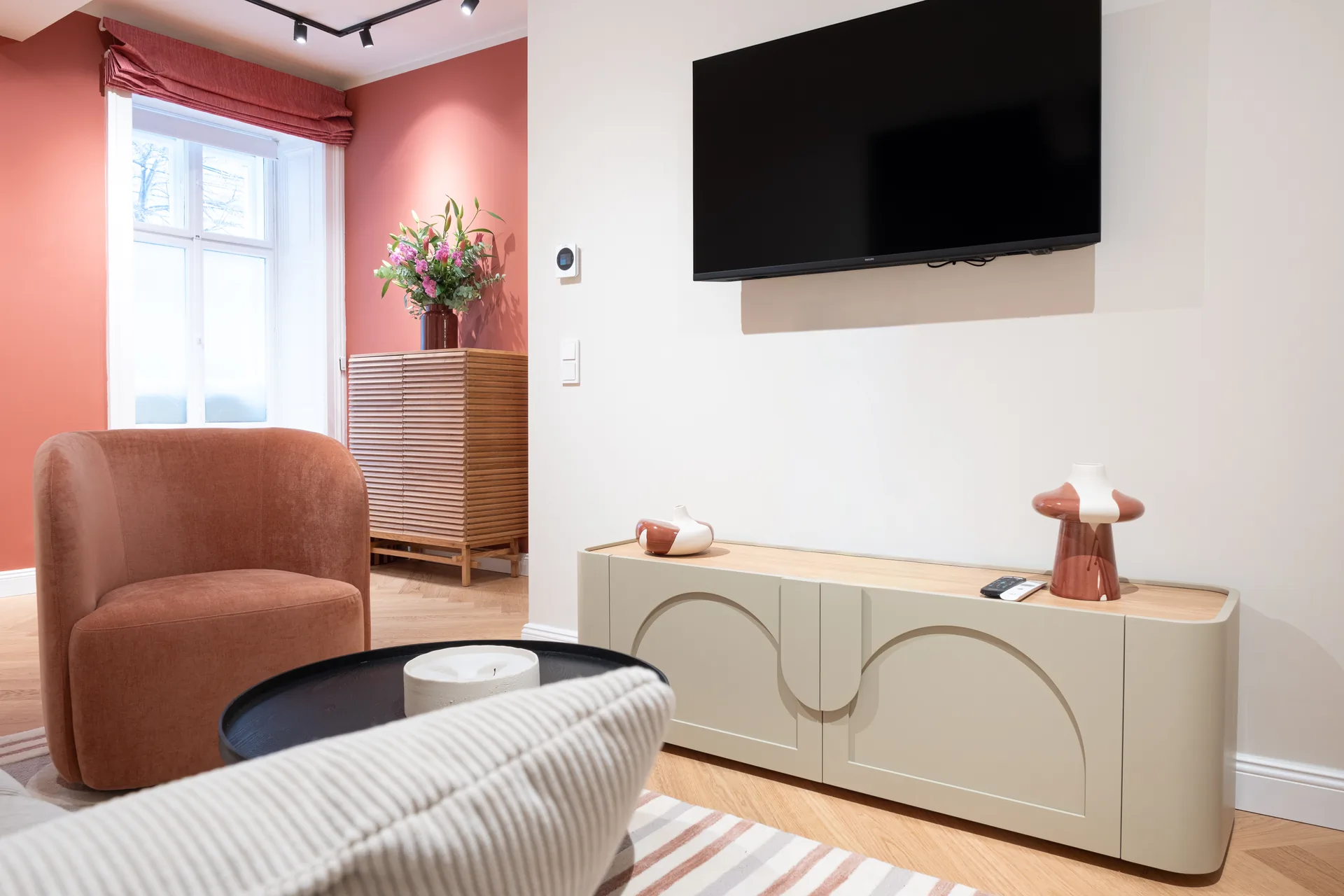
Looking for a base 1 minute from the Naschmarkt? Mini MINT is a 35 m² studio from €185 per night with a fully equipped kitchen — and that kitchen is the budget lever. Self-catering one meal a day instead of eating out cuts your daily spend noticeably over a week. Travelling as a group or family? Double MINT sleeps four in 55 m² from €205 per night with a full kitchen; splitting both the room and the grocery bill changes the maths on a Vienna week, especially with free under-19 museum entry on top.
Ready to pick dates? Check availability and book direct — no platform fees, and you can message Christian before arrival with any questions.
Frequently asked questions
Is Vienna expensive for tourists in 2026? Vienna is mid-priced for a Western European capital. A mid-range visitor spends roughly €75–€90 per day excluding accommodation; a budget traveller can do it on about €45–€60. It is comparable to Paris, clearly cheaper than London and Zurich, and pricier than Prague or Budapest.
How much should I budget per day in Vienna? For a mid-range day — coffee, casual lunch, neighbourhood schnitzel dinner, a 24-hour transit pass, one paid museum, and a drink — plan on about €75–€90 excluding accommodation. Market food, free museums, and tap water bring that to roughly €45–€60.
Is Vienna cheaper than Paris? No — they're close to level. Per Numbeo (May–June 2026, crowd-sourced), Paris is only about 3.7% more expensive than Vienna excluding rent. Vienna's transit is much cheaper (€51 monthly vs €90), though casual dining is slightly dearer here (€18 vs €15).
What's the cheapest way to get around Vienna? For trips of three days or more, the Wiener Linien 7-day pass at €25.20 digital (€28.90 physical) is best value — all metro, tram, and bus for a week, beating multiple 24-hour passes at €10.20 each. The standalone 48-hour and 72-hour passes were discontinued on 1 January 2026.
What is the Ortstaxe and will it raise my hotel bill? The Ortstaxe is Vienna's accommodation tax: currently 3.2% of the room charge, rising to 5% on 1 July 2026 (then 8% from 1 July 2027). On a €100 room the current rate adds roughly €2.52 per night, usually already included in the price shown on booking sites.
When is the cheapest time to visit Vienna? Winter — roughly January, February, and November — is typically cheapest for accommodation; summer is priciest. If you're travelling from July 2026, note the Ortstaxe rise takes effect on 1 July 2026.
Can I drink the tap water in Vienna? Yes. Vienna's tap water is Alpine spring water piped to more than 1,800 public fountains across the city — free, safe, and high quality. A refill saves a couple of euros a day versus bottled water.
Sources
- Wiener Linien — 2026 fare structure
- b2b.wien.info — Ortstaxe changes
- VisitingVienna.com — hotel/tourism tax
- Wien.info — Vienna City Card
- Kunsthistorisches Museum (KHM) — visit
- Belvedere Museum — visit
- Numbeo — Cost of Living in Vienna (May 2026)
- Numbeo — Vienna vs Paris
- Numbeo — Vienna vs Zurich
- Numbeo — Vienna vs London
- Numbeo — Prague vs Vienna
- Numbeo — Budapest vs Vienna
- VisitingVienna.com — Vienna prices (Feb 2026)
- SpendSanity — Wiener schnitzel prices 2026
- VisitingVienna.com — free things to do
- Wien.info — Viennese water
- Wien.info — the Naschmarkt
- Repark.at — Vienna parking 2026
- City of Vienna — parking fees
Last updated: June 2026. Christian, Host & Founder — MINT @Naschmarkt.